Pearson Partners International

Tag: management

  • The Evolution and Future of Work-From-Home

    The Evolution and Future of Work-From-Home

    photo of lisa thompson pearson partners international
    by Lisa Thompson, LPC, PCC
    Vice President

    The work-from-home and work-from-anywhere (WFH/WFA) model has profoundly transformed in recent years. What was once considered a novel concept has become an integral part of the modern workplace. The COVID-19 pandemic accelerated the global shift towards remote work, and as a result, employers and employees have had to adapt to this new way of working. In this article, we explore the changing work-from-home environment, its impact on individuals and organizations and the future of remote work.
    The Pandemic Push: WFH Goes Mainstream

    The beginning of the COVID-19 pandemic forced organizations worldwide to rapidly implement remote work policies. In a matter of weeks in early 2020, offices emptied, employees set up makeshift home offices, and business leaders had to quickly adopt new ways of managing their teams. This unprecedented shift was challenging and eye-opening, revealing the potential of remote work while highlighting its shortcomings.

    Increased Flexibility: One of the most significant advantages employees gained from remote work was increased flexibility. Many employees were able to set their schedules, allowing for a better work-life balance. This newfound flexibility boosted morale and job satisfaction.

    Technology Adoption: Companies invested heavily in technology to support remote work. Video conferencing, project management tools and cloud-based applications became essential for communication and collaboration. This tech adoption paved the way for efficient remote work environments.

    Challenges of Isolation: While remote work offered many benefits, it also introduced difficulties such as social isolation, loneliness and blurred boundaries between work and personal life. Many employees missed the office camaraderie, and some struggled with burnout.

    Adapting to a Hybrid Future

    As the initial shock of the pandemic subsided, organizations began to rethink their long-term remote work strategies. Many adopted a hybrid approach, allowing employees to split their time between the office and home. This shift has had significant implications for the future of work.

    Office Redefined: Offices are evolving into collaboration hubs rather than traditional workspaces. In-person workplaces facilitate team meetings, brainstorming sessions and in-person collaboration, while employees can complete individual tasks remotely.

    Emphasis on Outcomes: With employees working in different locations, organizations are shifting from monitoring hours worked to measuring outcomes and productivity. This change in mindset promotes trust and empowers employees to manage their time effectively.

    Talent Pool Expansion: Remote work has broadened the talent pool for hiring. Companies supporting remote work can tap into a global talent pool while expanding opportunities for diversity and inclusion.

    Challenges and Solutions

    While the changing work-from-home environment offers numerous benefits, it also presents pressing challenges.

    Digital Fatigue: Prolonged screen time and virtual meetings can lead to digital fatigue. Organizations must promote breaks, encourage offline work and provide wellness and mental health support tools.

    Cybersecurity Concerns: Remote work can expose companies to cybersecurity risks. Robust security measures and technology deployment are essential to protect sensitive data and systems.

    Communication and Culture: Maintaining a strong company culture and effective, consistent communication can be challenging in a remote or hybrid setup. Regular team-building activities and clear communication channels are essential.

    Work-from-home has come a long way from its early days as a niche concept. The pandemic accelerated its adoption, bringing both opportunities and challenges. As organizations continue to adapt and refine their remote work strategies, the future of work will likely be a hybrid model combining the best of both worlds—the flexibility of remote work and the collaboration of in-person interaction. Companies must prioritize technology, well-being and a culture of trust and accountability to succeed in this evolving landscape. The changing work-from-home environment is here to stay, and those who embrace it will thrive.

  • Work-from-Home: The New Normal or an Aberration?

    Work-from-Home: The New Normal or an Aberration?

    photo of stephen konstans
    Stephen P. Konstans
    Former SVP

    In March 2020 at the onset of the global pandemic, the U.S. workforce underwent a nearly overnight shift to working from home. The speed at which most of our U.S. workers successfully pivoted to work-from home is an incredible testament to the ingenuity and adaptability of the human spirit. Fifteen months later, many people are contemplating what work will look like in a post-pandemic era, whether in-office, at home or in some form of hybrid model.

    Not surprisingly, it depends on whom you ask. Many business leaders in information technology, healthcare, customer service and sales, for example, expect to continue at least some hybrid form of remote work, according to a recent Gartner survey, while other industries are more conservative about plans to continue work-from-home in the long-term. For example, financial services firms have been eager to return to the office full-time for many reasons, including security and compliance issues and concerns about firm culture.

    chart of march to april 2020 work from home shift

    Goldman Sachs Chief Executive Officer David Solomon, speaking at a February 2021 Credit Suisse virtual conference, said, “This [work-from-home] is not ideal for us, and it’s not a new normal. It’s an aberration that we are going to correct as quickly as possible.” (Bloomberg, 2021). Bucking the trend of many companies that have said they plan for some form of long-term hybrid work, Goldman Sachs announced in May that it plans for nearly the entirety of its workforce to return to the office by June 2021.

    Regardless of differing viewpoints, we certainly have been living a new normal for the past fifteen months. The speed of this fundamental change was vividly illustrated in an April 2020 Gallup poll, which showed that less than a third (31 percent) of adults in America were working from home at least some of the time in March 2020, but just a few weeks later in April 2020, that number had doubled to 62 percent.

    Fast forward to a year later, and a March 2021 Gartner survey of 258 HR leaders revealed that nearly half (45 percent) expected their workforce to return to the office in the third quarter of 2021, with another quarter (24 percent) projecting the fourth quarter of 2021.

    As a retained executive search consultant, I find questions about the impact of work-from-home very important to my livelihood. I have had a lot of anecdotal experience with this issue during the last fifteen months, but I wanted to research the answers more thoroughly so that I could better serve my clients. To do so, I asked a diverse group of my clients and business contacts—including CEOs, CHROs, consultants and other business executives across the United States and in a broad range of industries—for their thoughts.

    I believe that, by and large, people and companies depend on in-person teamwork and mentoring to be their very best. I predict that when the dust settles and the pandemic is behind us, most employees will have returned to the office at least most of the time, while about 35 percent of employees will remain working from home regularly. This represents only a small increment from pre-pandemic levels rather than a titanic change in how work gets done.

    Read my full study (PDF) to learn about my research and the reasons behind my prediction.

    image of 45 percent of HR leaders expect people to return to office Q3 2021


  • Succession Planning in a Multigenerational Workforce

    Succession Planning in a Multigenerational Workforce

    Lisa Thompson, LPC, PCC – VP & Professional Career Coach, Pearson Partners International

    For the first time in the modern U.S. workforce, five generations are working alongside each other and competing for opportunities. Each of these generations, having come of age in different cultural and economic environments, has developed distinct fundamental values and predominant work styles. These differences raise a wide range of challenges and complexities for organizations, including attracting, developing and retaining people with different motivators and at various stages of their careers. However, there is one overarching challenge: finding and hiring younger executives with the potential to become tomorrow’s CEOs, CFOs and other C-suite executives to lead organizations into the future while continuing to leverage the experience, knowledge and wisdom of older executives.

    pie chart of generations in the workforceAccording to Pew Research Center (Fry, 2018), Millennials (also known as Generation Y and born between 1981 and 1996) represent the largest component of the U.S. labor force, at 35 percent of workers. Generation X (born between 1965 and 1980) follows closely, representing 33 percent of the workforce. The Baby Boom generation (born between 1946 and 1964) represents 25 percent of the workforce, a number that is shrinking as the youngest in this group reaches age 56 and the oldest reaches age 74. Generation Z (born after 1997), now entering the workforce and representing 5 percent, is an increasing component of the labor force as these young adults complete school and look for jobs. We still have the Silent Generation (born between 1928 and 1945) in the workforce, representing 2 percent.

    The U.S. workforce largely comprises Millennials and Generation X, between 24 and 55 years of age. Baby Boomers, who dominated the workforce for decades, are now over 55 and many are retired or planning to retire in the next ten years. The reins of corporate leadership are being handed over to Generation Xers in their 40s and 50s. As they move up into the senior executive ranks, the next emerging group of workers includes Millennials and Generation Z, who are in their 20s and 30s and are the future talent being developed and mentored to take the lead. The Silent Generation is still represented in small numbers, with improvements in healthcare extending the duration that people can continue their careers.

    With five generations in the workforce, companies are faced with diverse groups of workers to engage and manage. Each generation brings different perspectives, viewpoints, motivators, communication preferences and work styles. These differences can result in misunderstandings and missed opportunities, especially in the workplace. Organizations should use distinct approaches to attract, retain and develop the right talent from each generation to fill their critical roles while appealing to many diverse types of candidates. Here, we focus on the work styles and motivators of the three youngest talent groups, comprising almost three-quarters of the workforce.

    Generation X

    For all the media focus on the differences in the work styles of Boomers and Millennials, Gen X has received far less attention. Sandwiched in the middle of two very different generations, Gen X has some of the qualities and styles of each, with some common factors to consider in recruiting, developing and retaining these new leaders.

    Gen Xers, in their 40s and 50s, value freedom and self-sufficiency to a greater extent than either the Boomers or Millennials. Like the Boomers, they are hard workers while still valuing family and personal time, and like the Millennials, they appreciate an enjoyable workplace along with flexible work hours and locations. Having grown up during a time of corporate downsizing and economic and political instability, they can be less attached to their employers—particularly companies that fail to engage them on a personal level. The value they place on community engagement makes it imperative for recruiters to showcase a company’s highest values and point out opportunities for executives to become involved in community, charitable and other causes that can make a positive difference in the world. Once onboard, Gen Xers need to continue to feel personally engaged and enriched to feel satisfied in their career.

    Millennials

    Millennials, in their 20s and 30s, represent the next generation of leaders. Their work styles, attitudes and work ethics have often been maligned and cited in sharp contrast with those of Baby Boomers. They have even been characterized as difficult to manage, which in fact usually results from a lack of understanding of their unique styles and motivators.

    Millennials grew up with abundant social and educational opportunities. They have been encouraged to voice their opinions and have a strong desire to have input and be part of the solution. They want to know that their work has meaning. Millennials are on track to be the most racially and ethnically diverse component of the workforce, according to Pew Research Center (Ibid). They are attracted to companies that show they value diversity in culture and thought, and those that embrace technology, inclusivity and teamwork.

    Generation Z

    Gen Z workers are in their early 20s and poised to add over 60 million people to the U.S. workforce. They are just beginning their careers amidst the social and economic disaster of COVID-19. Many are seeing their internships disappear and are not optimistic about finding a job after graduation, often while saddled with significant student debt.

    Gen Zers are digital natives and have not known a world without the internet and social media. In school and at work, they place more significance on what they do than where they do it. They are very comfortable with remote work (WFA, or work from anywhere) and often prefer it. They value transparency and honesty in their leaders. Recruiters will appeal to Generation Z by highlighting an organization’s open communication, flexible work and social responsibility.

    Succession Planning with Multiple Generations

    It is imperative to consider these differences in the multigenerational workforce when forming a plan for the development and succession of the leaders of the future. One of the first steps in succession planning is to determine the size and skill level of the internal talent pool. If there are not enough potential candidates at the mid-career level to replace the Generation Xers and Boomers in your company as they move up or into retirement, then now is the time to begin a focused recruiting strategy to bring more mid-level talent into the organization. If the internal candidate pool is already sufficient, then you should be actively developing these executives to retain them and ensure they are equipped with the skills needed to move up.

    For the succession plan to be effective, it is vital to prepare these future leaders for spots in the C-suite, whether they are longtime veterans or new to the organization. This development process begins with having a clear picture of your company’s vision: how it can improve, how you can better reach your customers and how you can invest more in innovation and growth.

    First, consider pulling together a strategic committee with executives from different disciplines and generations who are comfortable sharing and evaluating individual ideas to come up with an overall vision for the future. Thinking through this process can help identify those on your team who would be the best fit to drive the company toward these goals.

    Next, you should create a formal succession plan with a reasonable level of detail. For example, your plan might identify three employees who could become CFO in the next three to five years. List the strengths that make them a capable successor to the role and the areas that need development to make them and the company successful. Be sure to specify where there are gaps in your plan that identify external recruiting needs. You should update your succession plan regularly to reflect changes in both your organization and external market factors and monitor the progress of these rising stars in their annual or better yet, quarterly reviews.

    Once you have a detailed succession plan in place, you can start working with your high potentials to develop them to ascend in your organization. Development plans can include both formal and semiformal learning settings, such as one-on-one coaching or lunch-and-learn sessions with small groups. You might arrange to bring in a guest speaker or consultant to lead a classroom session or two devoted to specific leadership skills, such as motivating and developing others or providing constructive feedback. Potential leaders might be encouraged to pursue educational courses or certifications that broaden their knowledge and skills. In some cases, an executive coach can provide one-on-one leadership training—an essential consideration before moving someone into the C-suite.

    Often, you can deepen an executive’s commitment to the company by creating opportunities for high potentials to develop a more visible profile both inside and outside the organization. These steps could include putting them on the podium at trade shows and business events or launching a blog that aligns their personal and professional interests with those of the company.

    Another strategy for building leadership skills is rotating high potentials through different assignments or managerial positions. These “stretch assignments” can be an effective tactic for deepening executives’ engagement and can provide opportunities for them to develop new skills. Stretch assignments can be a crucial step in succession planning because they prepare a subordinate to seamlessly step into the shoes of the current leader if that senior executive were to take on a new role or retire.

    As with any professional development program, it is good to have a before-and-after comparison to determine the impact of these career-expanding activities. Subordinates and managers can participate in a 360-degree assessment or write a brief statement about how they view their current leadership skills compared with their prior skill set. A more formal baseline assessment can be conducted, perhaps with the help of a consulting firm. After the coaching, training, speaking engagement or stretch assignment, the company will have gained new insight into the candidate’s ability to lead while contributing to the strength of the organization.

    With five generations in the workplace, organizations can capitalize on the knowledge and experience of the older generations by engaging them in the ongoing process of training, coaching and mentoring younger generations in leadership skills and institutional knowledge.

    Make the Succession Plan a Priority

    Succession planning should be a high priority for all sizes and scopes of organizations. Finding and retaining the right talent and grooming them for C-level positions, while also developing the next generation to take their place ultimately, is instrumental in achieving long-term sustainability. The injection of fresh ideas and leadership styles can propel your company forward and take advantage of evolving market opportunities. As you focus on the urgent daily challenges, be sure to look to the future by developing and maintaining an effective succession plan.


  • Management by Wandering Around: It’s Good for You and Your Team

    Management by Wandering Around: It’s Good for You and Your Team

    image of executives going up the stairs

    Back in the 1980s, management consultant and best-selling business author Tom Peters wrote about the practice of “management by wandering around” (MBWA, also called management by walking around), a trait that helped Bill Hewlett and David Packard build HP into a leader in the computer industry. Apple’s Steve Jobs was another believer in the importance of getting out of the office and talking with employees at all levels of the organization.

    Today, it can be harder for senior executives to get up from their desks and stroll into the production area—especially when guiding remote workers and teams in different time zones around the world.

    But sitting too long in front of your screen can be not only hazardous to your managements style, it can also be detrimental to your health and well-being. A Mayo Clinic expert, Edward R. Laskowski, M.D., says in a recent article that the risks include putting on extra weight, high blood pressure, heart disease and cancer. In fact, according to Laskowski, an analysis of 13 studies found that people who sat for more than eight hours a day with no physical activity had a risk of dying similar to the risks posed by obesity and smoking.

    Fortunately, even an hour of moderately intense physical activity a day can counter that inactivity. Other ways to counter the negative impact of a sedentary managerial workstyle include getting up from your chair and walking around your office while on a conference call, either on speaker or better yet, a wireless headset. You could use a standing desk for an hour or more each day or put your computer over a treadmill so you can alternate periods of mental concentration with some physical activity.

    Another option is “active sitting,” using special chairs, stools and balance balls that improve health by using your body’s natural ability to balance. “The way you sit has a huge effect on brain activity,” says ergonomics expert Scott Bahneman. “It can change anything from your mood and hormones to memory and cognition.” After working at a desk job for years and experiencing a decline in health, Bahneman began researching how to combat “sitting disease” and found that active sitting can improve memory and cognition by requiring your brain to synchronize mental functions and physical movements.

    There are many other ways to add some physical activity to your workday, from taking the stairs instead of the elevator to taking a gym break or a lunch-hour jog through the neighborhood. If you’re the enviable “employee of the month” that gets the parking spot right next to the door, consider parking at the far end of the lot two or three times a week. You could also schedule your next meeting for a hallway or outdoor area, rather than the conference room, and discuss the topic on your feet instead of in your chairs.

    Of course, the practice of management by walking around is as valid today as it was decades ago. But as effective as it is in helping you to be a better manager, it’s even better for your health and fitness. So get on your feet and start moving if you want to maintain your personal well-being and be an effective leader in your organization.

  • Tips from the Leadership Coach: Invest in Your Management Skills

    Tips from the Leadership Coach: Invest in Your Management Skills

    [button url=”/newsletter/searchlight-newsletter-q1-2019/” scrollid=”” icon=”none” type=”inverse”]Go Back to Searchlight Q1 2019[/button]

    image of gears and management skillsSkilled managers provide the bedrock for organizational performance. They can shape the culture, improve productivity and drive creativity and innovation. But fewer training dollars are typically earmarked for managers than for people at other levels.

    David Deacon, whose career in human resources leadership has included executive positions at Credit Suisse, MasterCard and Capita, believes there are key steps managers can take to boost their careers and have a greater impact on the organization. “What makes a great manager has far more to do with your attitude than anything else,” said Deacon, author of “The Self-Determined Manager: A Manifesto for Exceptional People Managers.”

    Deacon focuses on the importance of attitude and intention, the cornerstone of becoming a self-determined manager—one who creates environments where people thrive and produce great work. “Bad managers are so focused on their own needs or their own fears or their own performance that they lose sight of the negative, unproductive, demotivating or destructive environment they are creating,” he said. “On the other hand, the best managers intentionally choose the environment they hope to create.”

    Here are nine suggestions from Deacon’s book to boost your management skills:

    1. Recognize the power of amplification. Every pronouncement you make may be repeated many times by your direct reports, and the expectations you set will be reflected in the work of your team. Make sure that you remain aware of how anything you are “putting out there” is being received and interpreted.
    2. Set your own high standards. You should be the one who defines professionalism and sets benchmarks—and when you do this, you will be recognized as a role model for others.
    3. Be willing to ask for help. If you need training in a certain area, put in a request. Be proactive about developing the communication and leadership skills that will help you create the best environment possible for your team.
    4. Treat employees like adults. Great managers don’t bully, shout, patronize, belittle, name-call, behave aggressively or condescend. To generate trust and respect, you must create an environment where adults can do great things.
    5. Don’t play favorites. Be aware of your personal preferences but be sure pay attention to everyone on your team. That keeps the focus on performance rather than favoritism.
    6. Demand more. Ask yourself and your team: What can we do better? The best managers have an instinct for continuous improvement and want to see changes made sooner rather than later.
    7. Manage your own energy. Self-determined managers know that maintaining their energy and enthusiasm is their own responsibility. Pay attention to your energy levels and develop habits that help you sustain them. “Remember, one of the most powerful outcomes of maintaining your energy is how it enables you to be positive,” says Deacon. “If you feel good, you will show it and transmit it!”
    8. Keep learning. Take a class, master a new skill, even take up a new hobby outside work. The best managers enjoy seeking knowledge beyond their professional work that reflects their interests, passions and pastimes.
    9. Don’t expect perfection, but keep working toward it. Even in a crisis, stay focused, catch people doing things right, articulate goals clearly and find meaning and purpose to transmit to your people.

    As Deacon says, “Decide right now that you not only deserve to become the best manager you can possibly be, but that you are capable of reaching this achievement on your own. Once you do this, you’ll be unstoppable.”

  • Traits and Characteristics of a Successful CHRO

    Traits and Characteristics of a Successful CHRO

    [button url=”/newsletter/searchlight-newsletter-q1-2019/” scrollid=”” icon=”none” type=”inverse”]Go Back to Searchlight Q1 2019[/button]

    graphic of traits of a successful chro

    What does it take to be a successful chief human resources officer today and how is that role changing?

    In today’s near-full-employment economy, where top talent is even more scarce, that question is on our minds. In collaboration with IIC Partners, our global executive search partnership, the Pearson Partners International team endeavored to answer it.

    Our latest white paper, Traits and Characteristics of a Successful CHRO (chief human resources officer), comes from the insight of a group of bright minds in global human resources that we assembled to share their experiences. Several of our current and former clients shared their perceptions. We offer special thanks to Sha Farley, CHRO of Young Life; Sean Harding, CHRO of Caliber Home Loans; and Rhonda MacAndrew, CHRO of Greyhound Lines.

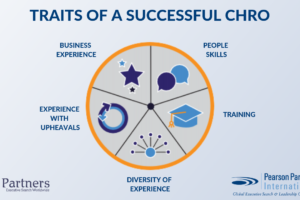
    People skills, knowing the business model and strategy, possessing a diversity of experiences and understanding how to transform are all critical skills for today’s CHRO. Challenges include finding the right talent in a competitive market, managing different career expectations as led by millennials in the workforce and improving employee engagement. Today’s CHRO also needs to be resilient, adaptable and intellectually agile.

    We hope you enjoy learning more about what human resources leaders around the globe are saying as you read the white paper.

    Read the white paper or download a PDF:


    Pearson Partners regularly publishes similar thought leadership, sharing our insight and observations to help our clients excel in leadership and innovation.

    Please SUBSCRIBE to be sure that you continue to receive this timely information.


  • Start the New Year with a Strong Value Statement

    Start the New Year with a Strong Value Statement

    core values graphicA clear statement of vision, mission and values can provide your organization with a solid foundation for success in 2019. But it doesn’t do much good to simply post those words on the company’s website and go on about your daily business.

    Instead, you should make it a priority to convey the “big picture” to your employees, partners, vendors and customers. It’s an important step toward building engagement, attracting new talent and strengthening customer loyalty.

    Consider taking some time early in the new year to prepare a statement of your organization’s values and convey that to your key audiences. While a vision or mission statement provides a starting point for framing a company’s non-financial goals, many people find it easier to relate to a company’s values.

    For example, a healthcare organization’s values might include a commitment to delivering quality patient care, quality improvement and learning and development programs for employees. A bank or insurance company might incorporate financial literacy, product transparency and customer privacy and security into its value statement.

    Every organization can prepare a value statement that is based on the beliefs of the senior leadership team, its position in the market and the demographics of its employee base, among other factors. It should flow naturally from the company’s vision and mission, rather than be copied from someone else’s statement.

    Why are values so important today? Just take a look at the business and political landscape of 2018. From harassment in the workplace to social justice and the environment, it’s clear that values are front-and-center in our nation’s daily conversations. While there’s no need to take sides on the heated political debates in Washington, it’s an ideal time to emphasize the values that are most important to your organization.

    Take advantage of this opportunity to develop a clear statement of values. Deliver it to your employees, email it to your customers and post it on social media. Link those values into your organization’s 2018 programs and accomplishments and make a commitment to advancing those values in the coming year. A modest investment of time in preparing your value statement can result in a powerful boost in employee engagement, customer goodwill and your ability to recruit senior executives in the new year.

  • Are You Measuring Customer Lifetime Value?

    Are You Measuring Customer Lifetime Value?

    Successful companies know their best customers—or think they do. Usually, they look at annual sales because that’s an easy number to measure. But those sales figures don’t show the entire picture. For example, your best customer for the past few years might cut back on purchasing this year, leaving you scrambling to fill the gap.

    Customer engagement is another important factor that is difficult to quantify or predict. A customer who likes your company and refers other business is far more valuable than one who simply buys your products or services.

    That’s why it’s important to analyze customer lifetime value (CLV), the present value of all the future cash flows coming from that relationship. CLV includes the projected amount of money the customer may spend as well as soft metrics like the cost of new customer acquisition or savings from customer retention, the propensity of a customer to refer the company to others and the cost of their loyalty.

    Measuring CLV helps companies see how their decisions and actions are tied together and encourages a long-term look at the customer relationship rather than short-term impact, according to a recent report by Avaya and Frost & Sullivan, “The Significance of Customer Engagement: An Investigation into Customer Lifetime Value”.

    The study points to the importance of customer retention and referrals, and examines how customer engagement can be influenced through a blend of business orientation, resource management and technology.

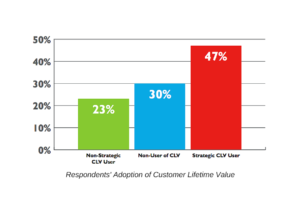
    chart of customer lifetime valueMeasuring customer lifetime value can help companies stay on track for success, since research shows that companies tracking CLV significantly outperform others in terms of profitability and growth,” said Laura Bassett, Avaya’s enterprise product marketing director.

    But the challenge facing many organizations is quantifying the value of customer engagement and determining the optimal mix of strategy, people, processes, culture and technology in order to maximize CLV, added Stephen Loynd, global program director, Frost & Sullivan.

    To address that challenge, Avaya and Frost & Sullivan devised a customer lifetime value calculator to give businesses a better idea of which factors to measure. By posing queries about customer support and acquisition costs, customer retention duration, competitive comparisons, business orientation and organizational and support capabilities and strategies, the calculator can help companies gain a better understanding of their customers and potentially increase profitability.

    “A more engaged customer becomes a more satisfied customer, more likely to spend, to recommend to others and to remain loyal,” said the report. “Put another way, customer engagement done right translates into increased revenue over a longer period at a lower cost—a higher lifetime value of customers.”

  • Oil & Gas Executive Outlook 2015

    Oil & Gas Executive Outlook 2015

    Photo of petrochemical plant oil and gasIn our recently conducted survey of more than 200 senior executives from across the oil and gas energy spectrum, we discovered the trends, issues and challenges they expect to see in 2015 and beyond. These industry leaders weighed in on such issues as headcount expectations, capital spending, merger and acquisition expectations, and more.

    >>Learn more and see data charts in the PDF of the full study.

    A Challenging Year Ahead

    The five-year outlook is optimistic, but most executives expect their industry segments to have a challenging year in 2015, primarily due to lower oil prices. When asked how they expect their industry segment to perform next year compared to 2014, 19 percent said they expect their segments to perform moderately better or significantly better, while 59 percent said they expect their segment to perform moderately worse or significantly worse.

    We asked the participants from all segments which industry segment will perform best in 2015, and two areas stood out: downstream (the refining, fuel retail marketing and petrochemical segment) and the majors (integrated oil and gas companies).

    When we asked the executives how they expect their own companies to perform in 2015, 32 percent said “better than 2014,” while 39 percent said “worse.” Also, 22 percent expect to see increased total headcounts at their companies in 2015, 36 percent expect to see lower headcounts and about 42 percent expect their companies’ total headcount to stay about the same.

    When it comes to capital spending, most companies expect a retreat from the record spending levels of the last few years. About 17 percent of the survey participants expect their companies to increase their capital spending, while 54 percent expect their companies to reduce their spending.

    Mergers & Acquisitions Expected to Increase in 2015

    Mergers and acquisitions are expected to increase quite a bit in 2015. Certainly, the recent announcements of the $34.6 billion Halliburton/Baker Hughes merger and the $8.3 billion Talisman acquisition by Repsol support this expectation.

    Of the executives surveyed, 70 percent expect an increased level of M&A activity, while only 16 percent expect less, and 14 percent expect M&A activity to be about the same as 2014.

    Oil and Gas Prices Will Remain Soft in 2015

    According to the majority of survey participants (59 percent), the 2015 average price for WTI oil will be in the range of $65 to $80 per barrel. About 34 percent of participants believe the price will be in the $50 to $65 range. Very few of the executives feel that oil will be below $50 (2 percent) or over $80 (5 percent).

    As a point of reference, during the days that the survey was conducted (December 8-12, 2014) oil traded in the $57 to $65 range. Oil spent most of 2014 in the $80 to $100 range, with a dramatic drop occurring in the weeks just before our survey.

    Sixty-seven percent of survey participants expect natural gas prices to average about $3.00 to $4.00, and 26 percent of participants believe natural gas will average $4.00 to $5.00 in 2015. A small number (7 percent) expect prices to be below $3.00. For reference, natural gas prices were in the $4.00 to $5.00 range for most of 2014.

    Very Strong Five-Year Outlook

    When asked how they expect their industry segment to perform over the next five years, a striking majority of the participants were positive: 76 percent said significantly or moderately better. Very few were negative: Only 6 percent said “moderately worse,” and none said “significantly worse.” Few (18 percent) expected their segments to perform about the same.

    Similarly, when asked about their individual companies, 83 percent expected their companies to perform better over the next five years, while 5 percent said that their companies would perform worse.

    According to the entire group of survey participants, the two industry segments that are expected to perform the best over the next five years are the majors (integrated oil and gas companies) and independent exploration and production companies.

    Industry Tailwinds

    When considering their own industry segment over the next five years, we asked the participants which were the most important drivers of opportunity, or tailwinds. The top three tailwinds cited are, in order: 1) global economic recovery, 2) new technology developments and 3) increased use of natural gas. New technology developments in the areas of hydraulic fracturing and drilling were cited most often. The increased use of natural gas in power generation was identified as the leading driver in the overall increased consumption of natural gas.

    Industry Headwinds

    Similarly, we asked the participants to identify the most significant challenges, or headwinds, that their industry segments will face over the next five years. The top four headwinds cited are, in order: 1) global oversupply of oil and gas, 2) unfavorable prices for oil, 3) increasing regulation/restrictions/taxes and 4) talent shortages. Two areas stood out in the answers for increased regulation/restrictions/taxes: A) local or regional bans on hydraulic fracturing, and B) increasing regulation or restrictions by the EPA.

    Talent-Related Challenges

    The survey participants were asked to identify the top talent-related challenges that they expected their industry segment to experience over the next five tears. The number-one issue cited was the “Great Crew Change,” or the retirement of key personnel expected in the near future. The second-most significant talent-related issue is the shortage of technical talent, such as engineers and geoscientists. The third-most-cited issue is the lack of leadership talent.

    Summary

    The oil and gas industry expects 2015 to be a challenging and dynamic year:

    • Lower oil and gas prices will continue in the short term.
    • Lower capex is expected in many companies.
    • Headcount reductions are expected.
    • Increased mergers and acquisitions are predicted.
    • Integrated majors and downstream companies are expected to perform better than other segments.

    However, the longer, five-year outlook is much more optimistic:

    • Most companies and industry segments are expected to perform better.
    • Independent E&P companies and the integrated majors are expected to perform best.
    • The “Great Crew Change”—retirement of key personnel in the near future—as well as global oversupply of oil and natural gas production are expected to be the biggest challenges.
    • Global economic recovery is expected to be the most significant long-term opportunity driver.

    About the Survey

    The survey was conducted between December 8 and 12, 2014. Of the 205 participants, 63 percent are at the C-level (chief executive officer, chief financial officer, etc.) or vice-president level. About 80 percent of the participants reside in the United States, with the other 20 percent residing in a variety of countries across the globe. Independent E&P companies and major integrated oil and gas companies account for 29 percent of the survey participants. Another 36 percent work for oilfield equipment and service companies, and the remaining 35 percent work in a variety of other industry segments.

  • Avoiding the “Big Four” Diseases:
 Developing Yourself and Your People for Improved Health and Productivity

    [button url=”/newsletter/searchlight-newsletter-q2-2012/” scrollid=”” icon=”none” type=”inverse”]Go Back to Searchlight Q2 2012[/button]


    DFW HR Roundtable Featuring Elizabeth Naylor, Ebenezer Wellness

    Recognizing the importance of promoting good health in the workplace, Pearson Partners invited nutrition expert Elizabeth Naylor, founder of Ebenezer Wellness, to speak at the April 10 bimonthly meeting of the DFW HR Roundtable, a networking and knowledge-sharing group of senior human resources executives in the North Texas area. Here is a summary of her comments about avoiding the “big four” health problems: cancer, heart disease, diabetes and dementia.

    While 90 percent of U.S. companies claim to have a wellness program in place, most employers are unable to measure the true impact on employees. At least part of the reason is that most organizations launch activity-based programs, rather than offering tools to support their people in making better choices moment-by-moment. Our session examined commonly held beliefs about wellness programs and identified what works and what doesn’t in terms of having an impact on outcomes.

    Q. Why is wellness and disease prevention so important to our society?

    A. Preventive health is far less expensive and much more effective than medical intervention to treat disease or other health problems. In addition, good health means energy, vitality and a higher quality of life—not just the absence of disease.

    Q. Can anyone avoid the “big four” health problems?

    A. In a world of conflicting headlines and confusing research, people constantly wonder if there is anything they can do to improve their chances of avoiding the big four diseases—cancer, heart disease, diabetes and dementia/Alzheimer’s. The answer is that they can indeed make it to 85 or 95 and still be healthy and happy. But individuals and groups must focus attention on maintaining good health and making any necessary changes in our diets, fitness habits and lifestyles.

    Q. So, how can employers promote better health in the workplace?

    A. First, employers need to understand that change happens over time—one person at a time, with one small step at a time and with one decision at a time. This change often occurs within the context of a trusted relationship and can even be contagious in a group environment. In a business setting, providing support through health professionals who focus on prevention and supporting the individuals’ best thinking is key to better health decisions in the moment.

    Q. How does that change occur?

    A. Employers need to focus their attention on the source of health outcomes, rather than activities. Currently, wellness program spending focuses about 10 to 20 percent on measuring results, while 80 percent to 90 percent of spending revolves around activities and incentives. So, a wellness program actually needs to work “backward” from the drivers of desired outcomes when considering avoiding the big four.

    Q. Can you explain that process?

    A. There are actually four stages to effective health outcomes. The last two are actually measuring the outcomes (i.e. blood pressure and weight) and focusing on the activities that drive those outcomes. The step before activities is decision making. This occurs moment by moment in a unique individual in a unique situation. Because this decision power is with the individual and they have an infinite number of variables that go into the decision, the most effective thing we can do is support that person in the moment. This is done by supporting the step before decisions—valuing. This is the thinking behind choices. Supporting a person’s understanding of their patterns of thinking supports bringing forward their best thinking, and with it the intrinsic motivation to make healthier decisions.

    Q. Where should employers apply their resources in this process?

    A. I would suggest that we shift spending from activities and incentives to individual and group support for finding best thinking. This clarity then drives the individual to self-select the activities that are important to them. For example, there are currently measurement tools that allow me to see where my thinking goes first. If it systematically goes to noticing the work to be done and other’s needs and never to noticing my own needs, that would explain my poor health choices. In fact, a wellness program that stressed “Just DO It” would engage me at first because I would feel the pressure, but I would quickly drop out and feel stressed in the process. Stressed because I did not “do enough” and stressed because it took time away from caring for others in my life.

    Q. Besides fitness, what are some of the other issues that can be addressed in wellness programs?

    A. Preventive health and self-care are areas of great potential. Understanding more about the drivers of health and disease, particularly regarding nutrition and stress, can be leveraged to provide long lasting benefits. In addition, supporting best thinking in individuals and groups supports the moment by moment decision making that leads to better decisions and less stress.

    Q. How do you measure success of a wellness program?

    A. I believe you need to measure success by the anecdotal stories told by participants. Stories are intrinsic by nature. They tell what happened to that individual and they motivate others as they are taken into the unique decision making of the person hearing or reading them. You can measure these patterns of best thinking as well—as individuals and throughout the organization. In addition, it is great to measure biometrics annually and productivity measures are also important. If you are looking for cost savings, I recommend that you change your plan accordingly.

    Q. So, what is the basis for a “healthy” wellness program?

    A. If your motivation is valuing your people as your greatest asset then investing in their development makes perfect sense. That’s a stronger foundation than looking to reduce costs or improve profitability. Ultimately, you want to expand your vision of wellness to one of increasing productivity and developing your people. That is the path to improved health outcomes.