Pearson Partners International

Tag: executive search

  • Exiting Gracefully in a Career Transition

    Exiting Gracefully in a Career Transition

    Photo of Renee Baker Arrington
    Renee Arrington
    President & COO

    As America begins the return to “normalcy” amidst the current crisis, many people may be facing a departure from their employer—whether voluntarily or otherwise. This seems a good time to reflect on the importance of making graceful, smooth transitions from one career opportunity to the next. Though change can certainly be difficult, here are a few tips to keep in mind to make sure to preserve your reputation and relationships in the process.

    Don’t burn bridges.

    The way an executive handles a departure from an employer can have a significant impact on his or her reputation and future career. Whether or not the move is voluntary, the adage rings true: Don’t burn any bridges.

    When exiting an organization, an objective and positive stance will help keep your business relationships intact. For example, if you are offered an exit interview, avoid any negative comments that could be construed as sour grapes. Choose your words carefully. Providing thoughtful, meaningful, honest input ensures that you will be remembered as professional, helpful and above-board, rather than angry and emotional.

    Contribute positively and be remembered well.

    Even if your company is the one severing ties, under some circumstances, you might be asked to participate in the process of finding and/or onboarding your replacement. While it may seem unthinkable, you’ll need to keep a cool head.

    If you are asked to provide input on the strengths and weaknesses of those who reported to you, be honest. Resist the temptation to play up the skills of your “favorites” while playing down their weaknesses, and certainly refrain from blame or bad-mouthing anyone. Give your successor the helpful, honest assessment you would like to receive if you were in the same position.

    In all interactions with the recruiting team or executive search firm, conduct yourself in a way that makes you an asset to that process rather than a hindrance. Making positive connections with people in the executive search industry can only help you in the long run and may even open the door to new opportunities.

    Remember that you may encounter your employer in the future.

    It’s a small world, especially in certain industries. You may think you are closing the door when you part from your employer, but you very well may encounter them in the future and your actions at the time of your departure will be remembered.

    Recently, Pearson Partners successfully completed a search for a vice president of sales for a large manufacturer. The finalist candidate worked for our client’s fiercest competitor and before moving on to his new role, he navigated his exit from the previous company with skill and grace. Eighteen months later, his new company was acquired by his previous employer and he was selected to lead sales for the newly combined entity. While he clearly had the requisite skills for the role, his polished, diplomatic departure made his promotion an easy decision.

    If a job transition may be in your future, wear your company hat until you are out the door. Smile, act gracefully and conduct yourself in a way that will make you—and your employer—proud.

  • Counteroffers During a Pandemic

    Counteroffers During a Pandemic

    photo of Stephen Konstans
    Stephen Konstans is a former SVP of Pearson Partners International.

    “Congratulations on your new chief financial officer job, Mr. Smith! It has been great working with you on this assignment for my client, Global Atlantic Corporation.” I have said similar things on no less than nine separate occasions since the beginning of the COVID-19 pandemic. (All names in this article, except the author’s, are made up to protect both the guilty and the innocent).

    Pretty impressive record for an executive search professional in an ordinary four- to five-month period, but especially impressive during a pandemic. For those who do not know the executive search industry well, we do low-volume and high-touch recruiting, meaning that in a typical year, most retained search consultants are likely doing between 10 and 20 searches. 15 searches in a year would be a substantial year. So, given the current market environment, these are very strong numbers (even if I do say so myself).

    Now, before I go patting myself on the back, let’s talk about what happened just two weeks after I had my previous conversation when I called to check in with my placement. “Hello, Mr. Smith,” I said. “Just checking with you one final time before you start on Monday with Global Atlantic Corporation.” (Pause…) “What? Your current employer has professed their undying love for you, offered you additional responsibilities, given you more salary, bonus and equity?” (Pause…) “They said they had always had these big plans for you and were just waiting for the right time?” (I asked, incredulously.) “Oh, you also have some concerns about making a change during these perilous times?” (Pause…) “But you have given Global Atlantic Corporation your word,” I said. “We have passed on other great candidates because you told us that you are a Global Atlantic kind of person.” (Pause…)

    At that point, as the recruiter, I had to decide among different options with Mr. Smith. Do I beg, do I cry, do I get angry or do I move on? My experience generally tells me that one is better off moving on at that point, so I did.

    Of the nine recent successes I mentioned above, I have had candidates go back on their word five times. To put this in perspective, in ordinary (non-pandemic) times, I might have a candidate accept a counteroffer once every year or two. In executive search, we find great people for our clients. Great people are always in demand, and even more so during a pandemic or other time of uncertainty, whether economic, institutional or social. That said, there are several effective strategies candidates and employers can benefit from in managing counteroffers.

    Candidates

    If you are an executive who has accepted an offer from a new employer and received a counteroffer from your current employer, I would advise you to consider the reasons why you were interested in making a move in the first place. Typically, problems don’t fix themselves, and difficult people tend to remain difficult. So, while it might be more comfortable in the short term not to change jobs, in the long term, you risk being back where you started, albeit with a few more dollars in your pocket. You also run the risk that your employer will remember what happened and could hold it against you. Additionally, the personnel from the company that you said you would go to work for, as well as the executive recruiting firm (if applicable), will often have a bad taste in their mouths about how you treated them. And, as the saying goes, it’s a small world.

     Employers Hiring

    If you are an employer looking for good people, always remember that when the recruiting process seems to be over, it’s not over. If you are looking to hire top-flight talent into your organization, it is imperative that once your new recruit has signed on the dotted line, you stay close to him or her during the transitional period. Touch base consistently, grab a meal with him or her if you can, and let this new hire know how excited you are to have him or her on the team. This helps the candidate to focus on the new opportunity versus what he or she is leaving.

    Another successful strategy to combat counteroffers is to minimize the window of time from the day the candidate gives notice until he or she starts with your company. It is also helpful to periodically update the incoming employee on all the good things happening at your company. It is important in these uncertain times to keep the candidate focused on the opportunity that awaits and to express to the candidate the strength and confidence your company has in its future (if this is accurate). If the company is not doing well, remind the candidate of why he or she wanted to join—a turnaround, a new adventure, a high-risk/high-reward opportunity, etc.

    Employers Losing an Employee

    If you are an employer who has just been given notice by a key employee, this pandemic and the general uncertainty around us is an opportunity for you. As bad as it sounds, the truth is that money (often) talks, as does opportunity. More importantly, if your company is stable, you can focus your employee on the strength and stability of your organization. It is important to convey to your employee (and mean it!) that his/her willingness to consider other opportunities is not something you will hold against the employee in the future. If you have done your part to stay close to your employees and have maintained a personal and professional relationship with a potentially departing employee, then you have an opportunity to influence him or her to stay with your organization. That said, think beyond the initial loss of a key employee. Maybe the right answer is to let the person go. Clearly, something caused this person to consider making a move. Will he or she want to move again in the future? Maybe you will find someone even better for your organization. Maybe a fresh set of eyes on familiar problems and challenges will make you a stronger organization in the long run.

    Conclusion

    In conclusion, the crazy uncertainty with the pandemic and its effects will pass. In the interim, it creates opportunities to recruit great people and hang on to great people. You just need to understand that there will always be strong competition for top talent.

    By the way, with the help of my great team and some resilient clients, we have found new people to fill all but one of the roles I was working on pre-pandemic. In fact, in one case, the person who accepted the counteroffer suggested the winning candidate for the role he decided not to take, proving that not overreacting to bad news does have benefits.

  • Succession Planning in a Multigenerational Workforce

    Succession Planning in a Multigenerational Workforce

    Lisa Thompson, LPC, PCC – VP & Professional Career Coach, Pearson Partners International

    For the first time in the modern U.S. workforce, five generations are working alongside each other and competing for opportunities. Each of these generations, having come of age in different cultural and economic environments, has developed distinct fundamental values and predominant work styles. These differences raise a wide range of challenges and complexities for organizations, including attracting, developing and retaining people with different motivators and at various stages of their careers. However, there is one overarching challenge: finding and hiring younger executives with the potential to become tomorrow’s CEOs, CFOs and other C-suite executives to lead organizations into the future while continuing to leverage the experience, knowledge and wisdom of older executives.

    pie chart of generations in the workforceAccording to Pew Research Center (Fry, 2018), Millennials (also known as Generation Y and born between 1981 and 1996) represent the largest component of the U.S. labor force, at 35 percent of workers. Generation X (born between 1965 and 1980) follows closely, representing 33 percent of the workforce. The Baby Boom generation (born between 1946 and 1964) represents 25 percent of the workforce, a number that is shrinking as the youngest in this group reaches age 56 and the oldest reaches age 74. Generation Z (born after 1997), now entering the workforce and representing 5 percent, is an increasing component of the labor force as these young adults complete school and look for jobs. We still have the Silent Generation (born between 1928 and 1945) in the workforce, representing 2 percent.

    The U.S. workforce largely comprises Millennials and Generation X, between 24 and 55 years of age. Baby Boomers, who dominated the workforce for decades, are now over 55 and many are retired or planning to retire in the next ten years. The reins of corporate leadership are being handed over to Generation Xers in their 40s and 50s. As they move up into the senior executive ranks, the next emerging group of workers includes Millennials and Generation Z, who are in their 20s and 30s and are the future talent being developed and mentored to take the lead. The Silent Generation is still represented in small numbers, with improvements in healthcare extending the duration that people can continue their careers.

    With five generations in the workforce, companies are faced with diverse groups of workers to engage and manage. Each generation brings different perspectives, viewpoints, motivators, communication preferences and work styles. These differences can result in misunderstandings and missed opportunities, especially in the workplace. Organizations should use distinct approaches to attract, retain and develop the right talent from each generation to fill their critical roles while appealing to many diverse types of candidates. Here, we focus on the work styles and motivators of the three youngest talent groups, comprising almost three-quarters of the workforce.

    Generation X

    For all the media focus on the differences in the work styles of Boomers and Millennials, Gen X has received far less attention. Sandwiched in the middle of two very different generations, Gen X has some of the qualities and styles of each, with some common factors to consider in recruiting, developing and retaining these new leaders.

    Gen Xers, in their 40s and 50s, value freedom and self-sufficiency to a greater extent than either the Boomers or Millennials. Like the Boomers, they are hard workers while still valuing family and personal time, and like the Millennials, they appreciate an enjoyable workplace along with flexible work hours and locations. Having grown up during a time of corporate downsizing and economic and political instability, they can be less attached to their employers—particularly companies that fail to engage them on a personal level. The value they place on community engagement makes it imperative for recruiters to showcase a company’s highest values and point out opportunities for executives to become involved in community, charitable and other causes that can make a positive difference in the world. Once onboard, Gen Xers need to continue to feel personally engaged and enriched to feel satisfied in their career.

    Millennials

    Millennials, in their 20s and 30s, represent the next generation of leaders. Their work styles, attitudes and work ethics have often been maligned and cited in sharp contrast with those of Baby Boomers. They have even been characterized as difficult to manage, which in fact usually results from a lack of understanding of their unique styles and motivators.

    Millennials grew up with abundant social and educational opportunities. They have been encouraged to voice their opinions and have a strong desire to have input and be part of the solution. They want to know that their work has meaning. Millennials are on track to be the most racially and ethnically diverse component of the workforce, according to Pew Research Center (Ibid). They are attracted to companies that show they value diversity in culture and thought, and those that embrace technology, inclusivity and teamwork.

    Generation Z

    Gen Z workers are in their early 20s and poised to add over 60 million people to the U.S. workforce. They are just beginning their careers amidst the social and economic disaster of COVID-19. Many are seeing their internships disappear and are not optimistic about finding a job after graduation, often while saddled with significant student debt.

    Gen Zers are digital natives and have not known a world without the internet and social media. In school and at work, they place more significance on what they do than where they do it. They are very comfortable with remote work (WFA, or work from anywhere) and often prefer it. They value transparency and honesty in their leaders. Recruiters will appeal to Generation Z by highlighting an organization’s open communication, flexible work and social responsibility.

    Succession Planning with Multiple Generations

    It is imperative to consider these differences in the multigenerational workforce when forming a plan for the development and succession of the leaders of the future. One of the first steps in succession planning is to determine the size and skill level of the internal talent pool. If there are not enough potential candidates at the mid-career level to replace the Generation Xers and Boomers in your company as they move up or into retirement, then now is the time to begin a focused recruiting strategy to bring more mid-level talent into the organization. If the internal candidate pool is already sufficient, then you should be actively developing these executives to retain them and ensure they are equipped with the skills needed to move up.

    For the succession plan to be effective, it is vital to prepare these future leaders for spots in the C-suite, whether they are longtime veterans or new to the organization. This development process begins with having a clear picture of your company’s vision: how it can improve, how you can better reach your customers and how you can invest more in innovation and growth.

    First, consider pulling together a strategic committee with executives from different disciplines and generations who are comfortable sharing and evaluating individual ideas to come up with an overall vision for the future. Thinking through this process can help identify those on your team who would be the best fit to drive the company toward these goals.

    Next, you should create a formal succession plan with a reasonable level of detail. For example, your plan might identify three employees who could become CFO in the next three to five years. List the strengths that make them a capable successor to the role and the areas that need development to make them and the company successful. Be sure to specify where there are gaps in your plan that identify external recruiting needs. You should update your succession plan regularly to reflect changes in both your organization and external market factors and monitor the progress of these rising stars in their annual or better yet, quarterly reviews.

    Once you have a detailed succession plan in place, you can start working with your high potentials to develop them to ascend in your organization. Development plans can include both formal and semiformal learning settings, such as one-on-one coaching or lunch-and-learn sessions with small groups. You might arrange to bring in a guest speaker or consultant to lead a classroom session or two devoted to specific leadership skills, such as motivating and developing others or providing constructive feedback. Potential leaders might be encouraged to pursue educational courses or certifications that broaden their knowledge and skills. In some cases, an executive coach can provide one-on-one leadership training—an essential consideration before moving someone into the C-suite.

    Often, you can deepen an executive’s commitment to the company by creating opportunities for high potentials to develop a more visible profile both inside and outside the organization. These steps could include putting them on the podium at trade shows and business events or launching a blog that aligns their personal and professional interests with those of the company.

    Another strategy for building leadership skills is rotating high potentials through different assignments or managerial positions. These “stretch assignments” can be an effective tactic for deepening executives’ engagement and can provide opportunities for them to develop new skills. Stretch assignments can be a crucial step in succession planning because they prepare a subordinate to seamlessly step into the shoes of the current leader if that senior executive were to take on a new role or retire.

    As with any professional development program, it is good to have a before-and-after comparison to determine the impact of these career-expanding activities. Subordinates and managers can participate in a 360-degree assessment or write a brief statement about how they view their current leadership skills compared with their prior skill set. A more formal baseline assessment can be conducted, perhaps with the help of a consulting firm. After the coaching, training, speaking engagement or stretch assignment, the company will have gained new insight into the candidate’s ability to lead while contributing to the strength of the organization.

    With five generations in the workplace, organizations can capitalize on the knowledge and experience of the older generations by engaging them in the ongoing process of training, coaching and mentoring younger generations in leadership skills and institutional knowledge.

    Make the Succession Plan a Priority

    Succession planning should be a high priority for all sizes and scopes of organizations. Finding and retaining the right talent and grooming them for C-level positions, while also developing the next generation to take their place ultimately, is instrumental in achieving long-term sustainability. The injection of fresh ideas and leadership styles can propel your company forward and take advantage of evolving market opportunities. As you focus on the urgent daily challenges, be sure to look to the future by developing and maintaining an effective succession plan.


  • 10 Tips to Win the Job

    10 Tips to Win the Job

    photo of Lisa Thompson, Pearson Partners VP and Professional Career Coach

    Lisa Thompson, LPC, PCC – Vice President & Professional Career Coach, Pearson Partners International

    Searching for your next job may be the hardest job you will ever have, and hopefully one of the shortest. The success of your job search depends on the amount of effort you expend as well as the quality of your actions. If you are launching a new job search, it can seem like a daunting task to manage your time correctly to reap the highest impact and results.

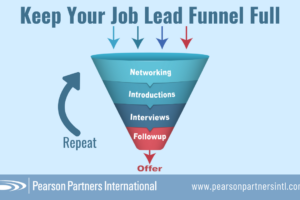
    An effective job search campaign should be treated as a full-time job. If you are unemployed, then the 40 hours or so you’d normally spend working each week should be devoted to your job search. It is easy to slip into a pattern of spending the day on other activities and minimizing the time devoted to finding a new opportunity. A good rule of thumb is to follow the 80/20 approach: Spend 80% of your available job search time on high-impact activities and the remaining 20% on lower-impact activities.

    Lower-impact job search activities include reading job postings, applying to posted positions and connecting with executive search professionals. Higher-impact activities include networking and reaching out directly to leads and potential employers. The effective jobseeker spends a significant portion of their time talking and meeting with network contacts, attending networking events, using social media connections, identifying target companies and finding referrals through their network. Successful job seekers set up a plan of action to make the most of each day.

    As a professional career coach, I am often asked what makes the difference between winning the job and being an “also-interviewed.” Over the years, I have given plenty of thought to this question as I have coached hundreds of senior-level executives making career transitions. Here are 10 tips that I use in my coaching engagements for how to win the job.

    Tip #1: Research thoroughly.

    Research makes a world of difference in preparing you with knowledge of the company, its challenges and opportunities, the interviewer(s), the competitive landscape and even the company culture. The level of research and depth of intelligence should go beyond reviewing the company’s website. Read reports, news, press releases, bios and social media commentary on the company—not just official company posts but also those of its employees, clients and competitors. Research on interviewers helps you prepare for the types of questions that may be asked and to connect with points uncovered in bios and profiles. Connections to the interviewer can include schools, community involvement, former jobs and companies as well as geographic similarities.

    Tip #2: Practice, practice, practice.

    Practicing for an interview is a rehearsal for the real thing. It is time well spent going over your elevator speech and preparing for potential interview questions. Consider practicing in front of a mirror or better yet, filming yourself. I have never heard any of my coaching clients say that they regretted the time spent practicing for an interview. In fact, most have felt it gave them the winning edge because they thought through their answers in advance, they knew what they wanted to convey with their responses and felt well-rehearsed and relaxed during their interviews.

    Tip #3: The interview is always in progress.

    Often, the interviewer will give the impression that the meeting will be casual or just a discussion. Never forget that you are being judged and evaluated throughout all encounters. Even if the interview is a friendly conversation over a burger and fries, it is still an interview and needs to be treated as an important opportunity to make a professional impression.

    Tip #4: Get the chemistry right.

    Chemistry makes the first impression in any interview. Decisions made about candidates in the first few minutes are not likely to change. Being able to read the interviewer’s body language and quickly adapt is a critical skill. If you are genuine and likable, you will often be given a pass for a small gaffe, or at least the benefit of the doubt in other areas. If you passed the resume screening stage, then presumably you are technically qualified and the importance of personality, style and cultural fit takes over.

    Tip #5: Show enthusiasm.

    Enthusiasm is a vital tactic for getting the job. Companies are interested in candidates who are interested in them. If you are too analytical or coy in the interview process, you will likely be perceived as indifferent or not worth pursuing. Remember that you cannot accept or decline an offer you have not yet received.

    Tip #6: Highlight your best career achievements.

    Highlighting your best plays can help you win the next interview and even the job. Be prepared with narratives that demonstrate what you have achieved in your career. Carefully review the job description and thoroughly research the company, its challenges and opportunities and the interviewer(s), if possible, to make sure you can provide examples of your work with quantifiable metrics to back up your results for the key areas listed in both the job description and your resume.

    Tip #7: Demonstrate your value proposition.

    Demonstrating your career accomplishments as they relate to the job, the company and the interviewer(s) will differentiate you as a candidate. Look for the company’s points of pain and connect how you can put your experience and expertise to work right away to make a difference. For example, if the company is looking to expand, change direction or enter a new geographical market, make sure you are crystal clear on how you can help achieve this goal.

    Tip #8: Be prepared to address weaknesses.

    Consider your weaknesses that you anticipate based on the job spec, interview or research. If you know you are not a perfect fit or that that an area of concern might surface in an interview, don’t wait for the interviewer to bring it up. Make sure you are prepared to address any area of perceived weakness with a strong response. If you walk away with unanswered questions, you will probably not have another chance to redirect or correct the impression.

    Tip #9: Ask for the job.

    Before leaving the interview, make it clear that you are intrigued by the job and would welcome the opportunity. Let them know you are receptive to an offer and ask if they have any questions or concerns about your candidacy. This also gives you a chance to address any weaknesses or misperceptions before they have a chance to take root.

    Tip #10: Follow up.

    Following up after the interview with a note or email to thank the interviewer(s) provides another opportunity to highlight your strengths as they relate to the job and to show enthusiasm for the position. Make sure you have a clear understanding of the next steps and timeline for filling the position and ask if it is okay for you to check back with them within the agreed upon time. Stay in touch with the key decision makers through sharing information, articles, quick emails or calls related to things they shared in the interview. Always ask if it is okay to follow up and get a feel for their appetite for contact. I have often heard of candidates winning the job because of their persistent and thoughtful follow-up.

    It is a tough job market out there, but a well-prepared candidate stands out. Approach each job opportunity with the same energy and enthusiasm that you would give your full-time job. After all, remember that while you are in transition, your job search is your job.


  • How to Attract and Retain Top Talent at Not-For-Profit Organizations

    How to Attract and Retain Top Talent at Not-For-Profit Organizations

    [button url=”/newsletter/searchlight-newsletter-q1-2020/” scrollid=”” icon=”none” type=”inverse”]As featured in our Q1 2020 Searchlight newsletter[/button]

    Talent strategy at not-for-profit organizations has long been a challenging prospect. It takes an accomplished leadership team to craft a brand, culture and compensation package to attract and retain talented leaders amidst tight budgets, public scrutiny and fierce competition for talent. So, how do they do it? Together with our global partners at IIC Partners Executive Search Worldwide, we asked senior executives at leading not-for-profit organizations to share their challenges and successes.

    Download the PDF (2.7 MB).

    Competing For Talent

    How To Make Your Not-For-Profit The Top Choice For Candidates

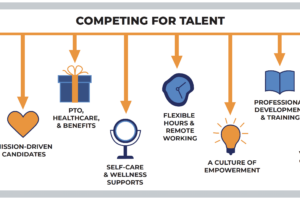
    Not-for-profit organizations need to build a complete 360 package matched with an exciting, mission-driven brand and culture and communicate this with clarity. Here are the key elements that our interviewees identified for attracting and retaining talented employees.

    Compensation

    Compensation is one area where it is hard to compete across the labor market—most of the leaders that we interviewed agreed they could not match commercial salaries. However, at higher positions, compensation can still be attractive and is not a barrier to entry for professionals with commercial backgrounds. Kathryn Allen, Regional Senior Vice President, American Heart Association, commented, “Once you get up in the upper ranks, I think our chief mission officer aligns with business officers. Both the actual pay and the benefits package are very, very rich.”

    Jennifer Bartkowski, CEO, Girl Scouts of Northeast Texas, shared this belief and stressed that the industry needed to communicate better about the benefits of a long career in not-for-profit: “We are trying to find ways to better communicate the impact you can have in the nonprofit sector. You can earn a living wage in the nonprofit sector if you move up the chain of command. So there’s real opportunity there.”

    “We are trying to find ways to better communicate the impact you can have in the nonprofit sector. You can earn a living wage in the nonprofit sector if you move up the chain of command. So, there’s real opportunity there.” – Jennifer Bartkowski, CEO, Girl Scouts of Northeast Texas

    Offering competitive compensation packages within the not-for-profit industry is essential. Almost all not-for-profits we spoke with conduct compensation reviews to ensure staff and candidates are receiving market value for their work: “I hire a compensation firm to review our salaries every three years, and I try very hard to make sure that our salaries are competitive in the marketplace,” added Bartkowski.

    This attitude underpins the ethical culture of many not-for-profit organizations, where they commit to living their values and ensure that staff are compensated well to the best of their ability.

    In some functions such as highly educated clinical roles, however, there can be greater competition with commercial organizations as the gap between potential salary can be wider. Paige Flink, CEO, The Family Place, commented, “We are having a hard time. Our turnover was more this year at the entry-level because the market’s crazy and people can go and make a lot of money.” That is where the following elements come in.

    Mission-Driven Candidates

    Money is not usually the motivating factor for talent attracted to the not-for-profit sector. Many of the leaders we spoke with believed they do not compete with commercial organizations at all as candidates are driven by the mission: “I think people soft-select already, and they realize they’re making that trade-off versus our trying to compete. In the 15 years I’ve been in nonprofit, I’ve never had to compete with the for-profit people. They’ve already made that mind shift,” stated Stacey Malcomson, President and CEO, The Senior Source.

    Jan Langbein, CEO, Genesis Women’s Shelter & Support, added, “It goes back to people who would like to make a difference. It’s somebody who says, ‘I want my day to matter’…You have to have a fire in your belly to end violence against women and children.”

    image of person working on laptopInterestingly, the majority of leaders at the not-for-profits we interviewed either came from commercial backgrounds or their colleagues did: “Almost all of my executive team have come from the corporate world or the academic world. They’re here for the mission, not for the pay necessarily, but we still have to pay them competitively,” stated Trisha Cunningham, CEO/President, North Texas Food Bank. It reinforces the idea that while salaries have to be attractive, they don’t have to match for-profits because candidates are purpose-driven.

    This does not come as a surprise, but it is an important point as the new generation of leaders are increasingly mission-driven. Not-for-profits should feel proud of their work and communicate it clearly during the hiring process.

    PTO, Healthcare and Benefits

    In our interviews, there was a strong emphasis on the full compensation package, not just salary: “Beyond our mission, we have focused on the business side of human resources. We have created a total benefits package to rival that of for-profit companies,” commented Scotty Landry, CEO, Make-A-Wish, North Texas.

    One of the critical elements of this total package is a comprehensive healthcare offering: “The other thing that we’ve done that tends to be attractive and I’m not saying we are going to do this forever, is we pay 100 percent of the employee’s benefit costs. We want to make sure our employees have access to good healthcare,” stated Trisha Cunningham, CEO/President, North Texas Food Bank.

    Another attractive element mentioned by many of our interviewees is more-than-standard paid time off: “[We offer] a really robust vacation package. You can start earning the minute you’re here.” stated Paige Flink, CEO, The Family Place.

    “You need to communicate the entire compensation package very clearly—that it entails a good retirement package and health allowance and that we offer a modern, activity-based office landscape. The physical working environment is, of course, important.” – Ulrika Årehed Kågström, Secretary General, Cancerfonden

    Along with a comprehensive benefits package, you need to know how to discuss it effectively with candidates, so the true value is understood: “You need to communicate the entire compensation package very clearly, that it entails a good retirement package, health allowance and that we offer a modern, activity-based office landscape. The physical working environment is, of course, important,” shared Ulrika Årehed Kågström, Secretary General, Cancerfonden.

    A robust benefits package can help candidates remove any fears that their living standards will be reduced due to a lower-than-commercial salary—which is often not the case.

    Self-Care and Wellness Support

    Another trend we are seeing is an increase in support services around self-care and wellness, and these peripheral benefits can be very desirable to candidates.

    “We build in self-care and that sort of thing as a benefit of being here. We bring in people to help take care of the caregivers,” stated Paige Flink, CEO, The Family Place.

    The attraction for candidates is not the tangible value of these services, but instead, the impression of a compassionate and caring culture. All of the leaders we spoke with deeply cared about their employees’ health and living standards, and were great examples of living their ethical values.

    Trisha Cunningham, CEO/President, North Texas Food Bank, added, “We switched healthcare providers last year, and we’ve learned a lot of the things that we could add to the ‘our wellness’ component. We just launched a fitness club pass so you don’t have to join only one club. You can go and attend a yoga class here, or a Zumba class here, a Pilates class here. It makes it an affordable option for some of our employees to get their fitness in, and we are helping to support self-care.”

    Flexible Hours and Remote Working

    In a more recent development, offering flexible hours and remote working has become a pivotal offering to attract and retain high-performance employees.

    Scotty Landry, CEO of Make-A-Wish, North Texas, commented, “I cannot stress enough how important flexibility is for our team members and how interested job candidates are about it during our interview process. Many, many candidates explain how even if the pay isn’t the highest they are offered, the ability to flex their time makes up the difference.”

    “I cannot stress enough how important flexibility is for our team members and how interested job candidates are about it during our interview process. Many, many candidates explain how even if the pay isn’t the highest they are offered, the ability to flex their time makes up the difference.” – Scotty Landry, CEO of Make-A-Wish, North Texas

    Landry’s finding that candidates’ willingness to flex their salary requirements in exchange for flexible working at mission-driven organizations is becoming an increasing occurrence across the sector.

    A Culture of Empowerment

    Offering flexible hours and remote working is not just a tool to attract new employees; it is a core belief in empowerment that is often inherent to social impact organizations. Landry continued, “We recognize our employees are fully-formed adults and are capable of balancing their work responsibilities with life responsibilities. We know how much our employees give to our mission and we want them to feel valued. Our candidates are drawn to the intangibles you can’t put a price on.”

    image of person raising their handDale Cleaver, CEO, Guide Dogs NSW/ACT, added, “The chance to be part of an organization that is transforming itself, knowing that staff and leaders can affect and visualize their results quickly—that is sometimes not found in the private sector.” It is this attitude of fairness, empowerment and mission that makes working at nonprofits extremely rewarding.

    All of our interviewees discussed the importance of carefully designing the organization’s culture with employees in mind: “First and foremost, it’s about what kind of organization and environment are we offering to them. We spend a lot of time on culture and developing a work environment that is attractive to everyone,” shared Jennifer Bartkowski, CEO, Girl Scouts of Northeast Texas.

    Needing to craft your culture to meet evolving employee expectations is particularly true of younger generations—more on that later.

    Professional Development and Training

    Investing in professional development is attractive to many employees in today’s environment of lifelong learning: “We invest pretty significantly in our employees. We do manager one on one training whenever someone gets into that position. We do some professional coaching as well when it’s appropriate. We have a succession planning program where we are trying to develop skills in our employees,” stated Jennifer Bartkowski, CEO, Girl Scouts of Northeast Texas.

    “We invest pretty significantly in our employees. We do manager one-on-one training whenever someone gets into that position. We do some professional coaching as well when it’s appropriate. We have a succession planning program where we are trying to develop skills in our employees.” – Jennifer Bartkowski, CEO, Girl Scouts of Northeast Texas

    Even when a path to the top is not possible, a focus on development is still there: “Even if there’s not a lot of opportunity for organizational advancement, I can guarantee that we can make you the best in your field. We offer professional development, training and coaching, and these skills are not only applicable to developing the roles at Genesis, but they are transferrable to any career move an employee may decide to make in the future,” said Jan Langbein, CEO, Genesis Women’s Shelter & Support.

    A similar approach is taken by Paige Flink, CEO, The Family Place, who is responding to greater specialization in clinical work with increased training: “Where you used to have a master’s level, now you have training in EMDR, which is a treatment modality that’s very specific and very expensive. If you don’t have that skill, we train you. Focusing on that kind of professional development is one thing we’re doing.”

    Flink continued, “We also have an online learning management system that has a number of modules. If you are entry-level and you want to progress in management, for example, there are certain online classes that you have to take. We’re constantly trying to professionalize The Family Place at a higher and higher level.”

    Volunteering

    An interesting finding is that not-for-profit employees deeply value the opportunity to volunteer on the frontline: “Our employees’ ability to work with our Wish families and Wish kids is almost always rated number one when we ask employees what they like about their jobs. It is also one of the top reasons job candidates give when asked why they applied with Make-A-Wish—they love our mission and want to be a part of it,” shared Scotty Landry, CEO, Make-A-Wish, North Texas.

    Stacey Malcomson, President and CEO, The Senior Source, shared this approach: “The incentives that we offer includes time off for volunteering. We try to have more flexible schedules.”

    As did Jennifer Bartkowski, CEO, Girl Scouts of Northeast Texas: “We really embrace their opportunities to give back. We actually had a rule that you could not be a Girl Scout leader while you were working at Girl Scouts, and we’ve just changed that because we had enough young people come in and say ‘I want to get to do that too. I want to volunteer my time.’ So we’ve adjusted that.”

    Clear from our research is that conversations with potential candidates have become far more nuanced and complex. The mission is important, but not enough on its own. Not-for-profit organizations are continually evaluating and adjusting their offering to remain competitive and attractive to the purpose-driven leaders who want to make a difference.

    Next-Generation of Leadership

    image of person looking out window at buildingsOur interviewees believed that the next generation of leaders are uniquely attracted to not-for-profit work as they are purpose-driven: “Our team is made of up roughly 50% millennials. As studies have shown, being connected to a cause provides deep connection for millennials and drives engagement,” commented Scotty Landry, CEO, Make-A-Wish, North Texas.

    Stacey Malcomson, President and CEO, The Senior Source, added, “I feel like the millennials really want to have that meaning in their work, and they’re willing to sacrifice pay for it. I think it’s kind of coming to us fortunately in that respect. I think people really want to help others.”

    “I feel like the millennials really want to have that meaning in their work, and they’re willing to sacrifice pay for it. I think it’s kind of coming to us fortunately in that respect. I think people really want to help others.” – Stacey Malcomson, President and CEO, The Senior Source

    Another great trait of younger generations, according to Alissar Barakat, Founder and President, DAR AL ALI Association, is their ability to manage constant change: “The Lebanese environment is never stable, however, due to its constant instability, the Lebanese next generation is self-trained on change management in all its aspects, and that easily reflects in their work with us.”

    Building a pipeline of talent to fill entry-level positions and progress right up to the C-suite is an essential component of not-for-profit talent strategy. Of the elements to successfully attract new employees, which are particularly crucial for the next generation of leaders?

    Inclusive Organization Design

    The number one message we received from our research was that the entire organization—brand, processes, policies and values—must be designed with your target employees in mind. This user-led design process pays dividends according to Dale Cleaver, CEO, Guide Dogs NSW/ACT: “Our brand is currently being redeveloped to make it more contemporary and attractive to younger demographics including employees.”

    And these efforts are not surface-deep: “Our organizational values were recently co-designed with staff, including younger employees and we are working on our culture generally to move it away from a hierarchical and formal style,” continued Cleaver.

    Trisha Cunningham, CEO/President, North Texas Food Bank, also stressed the importance of shaping your culture to fit the changing motivations of the new generation of leadership: “Over the past 18 months we have really been pushing an empowered culture versus a directive culture because we know that a lot of the younger employees want to change the world. They don’t want to come in and have someone tell them this is what I want you to do. They want their ideas to be heard as well. We have been bringing in this culture of empowerment, and we actually had a 20 percent increase from our last employee engagement survey to this employee engagement survey in the fact that the employees feel empowered, which is fantastic.”

    Flexible Working and Tailored Benefits Packages

    While flexible hours and remote working are desirable for all generations, it is an “attractive benefit particularly to young people,” stated Jennifer Bartkowski, CEO, Girl Scouts of Northeast Texas. Offering flexibility in work delivery can open your search to a broader range of candidates. This is particularly true for people who are disabled or chronically ill.

    It is also essential to recognize the specific needs of younger audiences and where extra assistance should be given: “We also find that many younger employees don’t understand why they should invest in a retirement plan. We contribute to the employee’s retirement plan without even a match, up to five percent a year, which is also an incredible benefit. We’re bringing in additional resources to be able to help our employees increase their financial knowledge and how they need to manage their personal finances as well,” stated Trisha Cunningham, CEO/President, North Texas Food Bank.

    Leadership Programs

    image of two people at computersAnother key strategy to attract new young leaders is to offer beneficiaries, volunteers, and entry-level employees a chance to become managers through leadership programs: “We have what we’re calling a Leadership Institute. We select ten people from across the food bank and we will bring people in on a monthly basis and they talk to them. The participants are hand-selected as high potential employees that need additional leadership training. We tie everything that we do to the mission, but we also let them know that through this Leadership Institute, we’re investing in them,” said Cunningham.

    Alissar Barakat, Founder and President, DAR AL ALI Association, uses community work with young beneficiaries to identify new leaders: “This exposure also allows us to identify young promising leaders and help them exercise their leadership skills by engaging them with various teams to achieve common goals that benefit the society they live in.”

    Ulrika Årehed Kågström, Secretary General, Cancerfonden, saw a huge benefit from this approach at her previous role as Secretary General at Red Cross: “We don’t have any youth organization [at Cancerfonden] where you get young talent interested in the organization and then directed to the mother company such as the Red Cross, that is one of their advantages.”

    Training

    Both The Family Place and Genesis Women’s Shelter & Support attract younger staff through training and development programs that offer staff a logical next step to build clinical experience. However, retention can be tough—after being fully trained, many move into private practice: “At Genesis, we don’t struggle to attract the younger generation. Our focus is more on whether the candidates display emotional maturity, drive and passion,” shared Jan Langbein, CEO, Genesis Women’s Shelter & Support.

    Flexible Job Requirements

    Increasingly employers across all sectors are focusing more on potential, not on formal experience. This is especially true for not-for-profits hiring for non-clinical roles. Ulrika Årehed Kågström, Secretary General, Cancerfonden, went as far as completely redesigning their management structure: “We have decided to redirect our focus to the potential among younger candidates rather than placing too much emphasis on formal requirements. The demands we put on managers were unrealistic. Instead, we are focusing on creating more managerial levels, a sort of entry-level leading positions.”

    Recruitment Processes

    Along with a comprehensive package, a strong brand and a values-driven culture, not-for-profits are successful at attracting and retaining talented leaders by evaluating and changing their recruitment processes.

    diagram of recruitment process steps

    Onboarding is Crucial

    There can be a risk of culture shock for any new hire, but this can be heightened for executives transitioning from for-profit organizations. Several respondents commented on the critical importance of a well-developed onboarding strategy to mitigate risks: “When hiring new co-workers, from outside our sector in particular, we put a bigger focus on their onboarding process until they get used to their new working environment and our culture. There is a value in that process that can’t be measured in monetary terms,” stated Ulrika Årehed Kågström, Secretary General, Cancerfonden.

    Use a Search Firm

    image of a lighthouseAll of our respondents have utilized executive search firms to meet their growing talent needs. Jan Langbein, CEO, Genesis Women’s Shelter & Support, commented on one search that went particularly well as a result: “I needed the technical help for hiring a major gift officer. By working with an executive search firm, I hit the jackpot of all jackpots! Not only does she care about the issue, but she has a specialized background, is a cultural fit and has been setting and exceeding measurable goals.”

    Some not-for-profit leaders can encounter resistance to using search firms, perhaps a result of restricted budgets or a grassroots approach to hiring. Kathryn Allen, Regional Senior Vice President, American Heart Association, thinks this is a mistake: “You’re short changing yourself.” Investing upfront can mitigate a lot of hiring risks and help you access a more extensive network of talented professionals.

    Communicating Culture

    Having a great brand and culture is essential, but without a smart communications strategy, it can exist in a vacuum. Our interviewees prioritized making their employees feel happy, engaged and included, and then they encouraged them to share their experience publicly: “It was once said that “Make-A-Wish is the Southwest Airlines of the nonprofit world.” We love that analogy. We strive for a culture that is fun. A place that everyone enjoys coming to work. One where employees like using the hashtag of #bestjobever in their social media post. We don’t always achieve this level with every employee, but we try,” commented Scotty Landry, CEO, Make-A-Wish, North Texas.

    “We strive for a culture that is fun—a place where everyone enjoys coming to work. One where employees like using the hashtag of #bestjobever in their social media posts. We don’t always achieve this level with every employee, but we try.” – Scotty Landry, CEO, Make-A-Wish, North Texas

    Paige Flink, CEO, The Family Place, links this sharing on social media directly to their hiring strategy: “We post fun things we do at The Family Place or try to do more interesting posts as opposed to just job postings.”

    In relation to hiring social workers, Barakat noticed a trend of greater interest in not-for-profits that have assisted their efforts: “Recently, most of the social workers are following up closely on the performance of humanitarian NGOs in the country, and we promote our work by posting our achievements on social media.”

    In the past, there was a lot of emphasis on candidates needing a positive online presence. Today that also applies to organizations. Candidates are increasingly using social media as a window into the organization and want as much insight as possible into what their employee experience may be.

    Think Outside the Box

    The final stand out hiring trend from our research is a willingness to look beyond traditional entry routes or backgrounds: “We’re not looking for particular fundraisers as much as we are people who are interested in sales. I think that nonprofits have to look at what are the transferable skills and what are the similar industries,” stated Kathryn Allen, Regional Senior Vice President, American Heart Association.

    image of people working in an office

    Diversity

    While all organizations are under increasing public scrutiny to diversify their leadership, the pressure is amplified for not-for-profits who are often held to higher standards than commercial organizations.

    A challenge unique to the not-for-profit industry is the need to attract more men into roles across the organization: “We pay attention to diversity, whether it’s hiring more men or trying to hire leaders that represent diversity. We’re highly conscious of it, but we’re also pretty successful at it,” stated Paige Flink, CEO, The Family Place.

    Stacey Malcomson, President and CEO, The Senior Source, added that when it came to diversity, she was “more concerned about adding men,” demonstrating the extremity of the issue.

    Across the sector, however, there is still a way to go with gender equality at the top, with women still falling behind at the CEO and Board level. This issue of lower representation of women at the top extends to all areas of diversity. Malcomson continued, “Our younger staff are very diverse, but at our director level, it is not as diverse.” So what can leaders do to encourage greater diversity and inclusion?

    Flexible Job Requirements

    Jan Langbein, CEO, Genesis Women’s Shelter & Support, highlighted that formal education requirements are a barrier to hiring diverse candidates: “We find that graduate schools are just not full of diversity for that functional area. We hire masters level candidates, which can be difficult to do.”

    Ulrika Årehed Kågström, Secretary General, Cancerfonden, experienced the same issue: “We are not as successful at recruiting individuals from areas lacking socioeconomic strength, due to the high requirements on former experience, something we are trying to change now.”

    However, according to Paige Flink, CEO, The Family Place, recently these barriers are coming down: “The diversity of our population in Texas is changing, and education is more accessible to diverse people.” Still, remaining flexible in job requirements and offering training towards formal qualifications is a vital strategy for attracting a diverse workforce.

    Prepare for the Long-Haul

    Implementing strategies to support diverse hiring can encounter resistance from already stretched not-for-profit employees, according to Ulrika Årehed Kågström, Secretary General, Cancerfonden: “The recruiting managers have struggled with balancing their need to recruit someone quickly with meeting our need to challenge the profile and find different talent. It has been the HR department and me as Secretary General who have had to stand up and argue for this recruitment strategy and try to coach the resistance we have met from the managers.” Despite the difficulty, Kågström believes the rewards soon become evident: “As we have worked with this new strategy for some time now, the resistance is less and less as the managers see the results, the people we have been able to recruit now and what they add to the organization.”

    “The recruiting managers have struggled with balancing their need to recruit someone quickly with meeting our need to challenge the profile and find different talent.” – Ulrika Årehed Kågström, Secretary General, Cancerfonden

    Hire Search Firms to Expand Reach

    As discussed above, hiring diverse candidates can be a complex process after decades of exclusionary practices—but a search firm can help: “The organization has to be intentional in a commitment to diversity and younger folks. And then they have to get the resources, like hiring a search firm to go find it,” commented Kathryn Allen, Regional Senior Vice President, American Heart Association.

    In summary, here are the top things to keep in mind when attempting to diversify your organization:

      1. Flex formal requirements. Hire for potential, not just experience.
      2. Prepare for the long-haul. Hiring for diverse talent can require some significant changes, but the dividends soon come.
      3. Extend your reach with search firms. Search firms are a vital extension of your HR team to help you expand access to diverse talent.

    Performance Management

    diagram of performance management steps

    Performance management at not-for-profit organizations operates at extremely high stakes. Work output can be critical to the lives of millions, and external funders have strict performance requirements: “I think a lot of people misunderstand nonprofit organizations and think that we aren’t businesses or that we don’t have a formal structure in place. So we work very hard at being a 21st-century business, which means we have to have performance standards,” stated Jennifer Bartkowski, CEO, Girl Scouts of Northeast Texas.

    Productivity is often closely monitored, ensuring funding targets and impact goals are met: “Measuring productivity is another thing that we’ve really instituted. We’ve got an online client tracking system now where we can see real-time how many clients you’re seeing on a weekly basis, and there’s an accountability to that,” stated Flink.

    “Measuring productivity is another thing that we’ve really instituted. We’ve got an online client tracking system now where we can see real-time how many clients you’re seeing on a weekly basis, and there’s an accountability to that.” – Paige Flink, CEO, The Family Place

    In line with the values of empowerment, this tracking is not about controlling employees, but more about ensuring they reach as many people who need their services as possible. Not-for-profits often have long waitlists or coverage gaps due to funding shortfalls. One solution is to raise more money; another is to maximize performance.

    Real-Time Assessment

    image of two women working togetherOngoing, real-time assessment is essential to achieving the most performance gains: “Our performance evaluation system is a continuous rather than periodic process,” stated Alissar Barakat, Founder and President, DAR AL ALI Association.

    Scotty Landry, CEO, Make-A-Wish, North Texas, added, “The greatest value to our business comes from our ability to make quick course corrections during the year because our managers and team members evaluate big picture goals and progress regularly instead of only once a year.”

    This approach includes daily reporting in the American Heart Association fundraising team: “The individual sends a daily report on where they are compared to their goal,” stated Kathryn Allen, Regional Senior Vice President, American Heart Association. The myth that not-for-profits have fewer performance management requirements than commercial organizations is clearly false.

    Commercial Influence

    All of the interviewees closely modeled their performance management systems from those used at commercial organizations—this is not surprising when many not-for-profit leaders have commercial backgrounds.

    Sometimes this includes financial incentives tied to performance: “If you feel like you are getting differentiated pay for your performance, then it’s definitely a motivator for you to continue to excel in what you’re trying to do. One size does not fit all—and we all know that from the corporate background and structure you get differentiated pay,” shared Trisha Cunningham, CEO/President, North Texas Food Bank.

    Kathryn Allen, Regional Senior Vice President, American Heart Association, added, “[Fundraisers] can get up to 25 percent of their salary in incentives. I do feel like we have modeled ourselves after more of the private sector than other nonprofits.”

    Yet, according to Barakat, there is a crucial difference: “Although our performance evaluation system is somehow similar to the private sector, the bottom line of our mission is different, and that makes a big difference because the private sector focuses on profit and gain, while our mission is a better life and well-being of people—which includes no profit and where ethics, goodwill and values play a major role in the staff performance.”

    Including ethical behavior in performance reviews is a key differentiator that is increasingly being adopted by commercial organizations as they face greater public scrutiny.

    The Need to Customize 

    While there is influence from other sectors or past experience, it is vital to customize the platform to your specific needs: “We work with consulting teams and external partners but always make sure that we own the system ourselves. Otherwise, it is hard to establish ownership of the system and if it won’t be used, we need to take responsibility for it and feel it is ours,” stated Ulrika Årehed Kågström, Secretary General, Cancerfonden

    Sometimes this includes extending it beyond traditional uses: “We took that instrument and rolled it back to the interview process. My interview process is several steps, and one of the steps is this panel interview where we are trying to predict the probability of success at the end of the year. The instrument we use in the interview process is taken from the annual assessment,” stated Stacey Malcomson, President and CEO, The Senior Source.

    The Impact of Performance Management

    Successful performance management systems lead to greater accountability and data-driven action: “We act now on performance issues much faster than we ever have in the past because one of our values is accountability and if you’re not performing, we have to take action on that,” stated Jennifer Bartkowski, CEO, Girl Scouts of Northeast Texas.

    Scotty Landry, Make-A-Wish, North Texas, added, “We used to have a very complicated performance management system that wasted our managers’ time and team members were not involved in the process. The GPS system (growth/plan/support), which is developed by our leadership team and was based on private-sector systems, has improved our team’s performance by ensuring clear expectations are set and monitored throughout the year.”

    However, if the system is not working, it can derail an organization—like when Jennifer Bartkowski, CEO, Girl Scouts of Northeast Texas experienced widespread issues with a new customer engagement initiative: “I went to the board after we implemented it and said, look, we’ve broken our system here. We’ve broken the organization and we’re going to have to rebuild.” Bartkowski used this breakdown as a chance to demonstrate tough leadership and not being afraid of challenges or failure: “It was kind of a blessing because it would have been harder to make change if we hadn’t broken it through that. And also, we have a nice reputation for doing hard things.” It is this kind of leadership that encourages employees to test, fail, learn and innovate.

    Public Scrutiny

    There is a rise of public scrutiny across all sectors as unethical behavior is increasingly exposed, and consumers make values-driven buying decisions. But this environment is not new to not-for-profits: “We feel like we’ve always been under scrutiny. I don’t feel different now because we’ve always had an accountability structure in our organization. We’ve always been audited by both our government funders and third-party auditors,” shared Paige Flink, CEO, The Family Place.

    “I think our vendors are what holds us accountable. We’ve got a lot of government funding, so that helps us. We’re very metrics-based and have lots of ways to count. A lot of our funding comes from private and public grants, so we have to be on our toes all the time. And it’s something we pride ourselves on. Otherwise, people are not going to fund you. They want to know the outcome.” – Stacey Malcomson, President and CEO, The Senior Source

    Also, funders have strict rules that keep not-for-profits accountable, and the penalties for missing targets can mean losing funding altogether: “I think our vendors are what holds us accountable. We’ve got a lot of government funding, so that helps us. We’re very metrics-based and have lots of ways to count. A lot of our funding comes from private and public grants, so we have to be on our toes all the time. And it’s something we pride ourselves on. Otherwise, people are not going to fund you. They want to know the outcome,” stated Stacey Malcomson, President and CEO, The Senior Source.

    While it is positive to be results-driven and accountable, Ulrika Årehed Kågström, Secretary General, Cancerfonden, highlighted that too much caution could paralyze innovation and performance: “There is a strong fear of not doing right/doing the wrong thing, which hampers the development and creates a focus on details.”

    This pressure to ‘do the right thing’ was also mentioned by Trisha Cunningham, CEO/President, North Texas Food Bank: “We’re a very prominent organization. Our brand study shows that we have the top awareness, so we want to make sure that we do not risk this and do things right.”

    With increasing pressure to stand on issues, being too risk-averse can lead to missed opportunities to build brand awareness and advocate for your beneficiaries. But there is no denying that public scrutiny is fiercer than ever, so we truly understand the need to tread carefully.

    Closing Comments

    Attracting, developing and retaining talent at not-for-profit organizations is an increasingly complex prospect. Leading organizations are continually evolving their approach, and at the heart of their success is a deep commitment to employee empowerment and inclusive organization design.

    Despite the challenges ahead, all of the developments we uncovered are extremely positive for the employee experience and for maximizing service delivery to those who need it most. We honor the incredible work of the leaders who are driving the not-for-profit sector forward.

  • Age as an Asset in Your Job Search

    Age as an Asset in Your Job Search

    Lisa Thompson, LPC, PCC – Vice President & Professional Career Coach, Pearson Partners International

    photo of Lisa Thompson, Pearson Partners VP and Professional Career CoachNow more than ever, people are entering the job market with concerns about finding a job that fits their level of experience (and in some cases, any job). Often, executives over the age of 50 can find themselves competing for positions with candidates 10 to 15 years younger. It is not uncommon for senior-level executives with highly successful career histories to learn that they lost the job to someone less experienced and younger.

    Most often, senior executives lose out because they have not presented their age and experience as assets to the hiring organization. Keep these tips in mind and you can use your age to your advantage in a job search.

    Demonstrate relevant experience and expertise.

    When competing for a position, you need to thoroughly research the company and approach the interview with a well-developed value proposition, including specific and measurable ways you can make a difference immediately. The experience factor is an asset that can help you ace the interview if you show that you understand the company’s strategic needs and can give valid examples of how you have handled similar situations.

    Don’t advertise your age too early.

    Your resume can affect how employers and recruiters perceive your age. If your resume shows that have over 30 years of experience and graduated from college in the 1970s or 1980s, it is not difficult to do the math. Your age will be revealed in the recruiting process, but you can help avoid being dismissed in the first pass by not including every job you have had since high school. Limit job history on your resume to the last 10 to 15 years to show recent roles and skills, and omit dates on your education and certifications. You can provide those details later after you have had the chance to show your experience, expertise and value proposition.

    Avoid using a one-size-fits-all resume.

    Read each job description carefully to make sure you show experience and expertise relevant to the position. Highlight your career accomplishments with quantifiable metrics. The way you quantify your achievements will vary for different positions—you should emphasize different metrics for a sales role than for one in marketing or technology.

    Show that you are an intergenerational team player.

    Whether in an interview or on the job, promote your ability to be a team player and to take direction or learn from a younger colleague. While older executives have much to offer in the way of experience and maturity, younger generations also have much to teach. Think of mentoring as a two-way street with collaboration as the intersection.

    Dispel the myth that older executives are not tech-savvy.

    Show your capability by understanding the technology and tools needed for each role and using relevant language. Make sure you have updated your social media, including a professional headshot. Brush up on skills to use video apps, especially for virtual interviews. If necessary, take some online classes to sharpen your technology skills and to make sure you are using the correct tools. Work on certifications or training to show you are staying current and continuing to learn and grow.

    Leverage advocates in your network.

    Working your professional network is critical to making a personal connection with a targeted company or hiring manager. Leverage your network connections to find someone that can help you reach the right people. Having an advocate that can validate your talent and abilities gives you a significant advantage over other candidates, regardless of age. As the saying goes, “It’s not always what you know, but whom you know.” This is yet another area where age is an asset: The longer someone has been in the workforce, the larger that network is likely to be.

    Above all, keep a positive attitude in your job search. If you are persistent and keep working the process, you will find the right opportunity. The person that wins the job is the one that goes into the interview with the confidence that comes from experience and the energy that comes from knowing their passion.

  • Diversity and Inclusion: ROI, Business and Cultural Impacts

    Diversity and Inclusion: ROI, Business and Cultural Impacts

    [button url=”/newsletter/searchlight-newsletter-q1-2020/” scrollid=”” icon=”none” type=”inverse”]As featured in our Q1 2020 Searchlight newsletter[/button]

    Diversity and inclusion strategies can deliver return on investment beyond just numbers. Representation is a measure of diversity and employee experience is a measure of inclusion. Both increase productivity and profitability. Yet, many organizations approach diversity initiatives by simply “checking off the boxes” for recruitment and reputation management. To explore best practices for inclusion and diversity strategy, we invited a panel of diversity and inclusion leaders to share their thoughts and experiences at our March 3, 2020, Spotlight SeriesSM breakfast.

    Esteemed Panel

    Our panel was moderated by Pearson Partners Vice Presidents Lisa Thompson and Carolyn Simons and included:

    • Traci Dunn, Vice President of Inclusion, Diversity & Corporate Impact, McKesson
    • Ellen Farrell, Vice President of Social Innovation and Executive Advisor, Toyota Motor North America
    • Bobby Griffin, Vice President of Diversity & Inclusion, CBRE
    • Whitney Johns Martin, Managing Director and Co-Founder, Texas Women Ventures

    Inclusion means truly valuing differences and being intentional about creating an environment where differences can work to benefit the organization and its customers.

    The Evolution of Diversity and Inclusion

    Diversity reflects inclusivity. Organizations that are truly inclusive in attracting, developing and retaining talent can gauge results using diversity as a measure. “Inclusion” doesn’t mean tolerating differences. It means truly valuing differences and being intentional about creating an environment where differences can work to benefit the organization and its customers.

    A growing number of companies have implemented formal diversity and inclusion initiatives, with dedicated leaders at high levels. These diversity and inclusion (D&I) roles have evolved from a human resources function to a leadership initiative, with diversity as a priority that is integrated into every aspect of the talent lifecycle.

    D&I work is still closely aligned with human resources, yet the role may also touch everything from culture development and employee engagement to corporate impact and foundation work. By intentionally partnering with talent-focused efforts, rather than working in a silo, D&I leaders can align and integrate their efforts across the organization to make a systemic impact.

    The Value of Diversity and Inclusion

    A diverse organization is better equipped to support a diverse customer base. But it’s not just about “looking like your customer”, it’s about thinking like your customer by bringing a wide range of perspectives and viewpoints to the table. It’s about connecting D&I as an enabler of success—particularly in areas where an organization may not have led in the past.

    Diversity of thought feeds innovation, which pushes organizations forward into new growth opportunities.

    D&I is also critical for attracting and retaining the best talent in a tight labor market. Creating an environment where people feel free to bring their authentic selves to work fosters an open market of ideas. In workplaces where all employees’ opinions, voices and ideas truly matter, organizations are better able to retain their people because they feel welcome, respected and valued. Recruiting and retaining diverse talent creates a diverse organization over time. It’s important to ensure that position descriptions do not have built-in biases that could rule certain people out and that D&I efforts are supported across the organization with ongoing training on unconscious bias, bias interrupters, inclusive leadership and cultural competence.

    Generational and Gender Diversity

    D&I efforts also capitalize on diversity across generations in the workplace. Some organizations have created employee resource groups for emerging professionals to create a forum for multigenerational perspectives and help shape internal policies and procedures.

    Mentoring and reverse mentoring across generations can encourage employees of all ages to share what they bring to the table and can help create an inclusive environment.

    Women-led businesses, or those with gender-inclusive management teams, often struggle with access to venture capital, in part because the investment community is male-dominated. In the late 1980s and early 1990s, about 1 percent of private equity money went to female entrepreneurs. Today, with a growing number of women involved in investment committees and serving as investors, that figure has risen to about 3 percent—but there is a long way to go in involving more women in the investment community and increasing access to capital for women-owned businesses. About 65 percent of investment funds are currently guided solely by male decision-makers.

    Diverse Leadership

    Employee engagement surveys help ensure that team members feel their opinions are valued. They can also help gauge the success of D&I efforts by evaluating data about specific demographics. Incorporating D&I-related measures into overall measures of success and tying them to executive compensation can help embed diversity efforts into company culture from the top down.

    Diversity at the top sets the stage for a diverse and inclusive organization.

    A diverse executive team and board of directors are well-equipped to intentionally lead with D&I in mind, while bringing diversity of perspective to organizational leadership and culture. By being intentional about supporting every employee’s growth and aspirations within the organization, leaders can build cultural competence to create a truly inclusive environment where the benefits of diverse thought can thrive.

  • 10 Tips for Working with Executive Recruiters

    10 Tips for Working with Executive Recruiters

    Lisa Thompson, LPC, PCC – Vice President & Professional Career Coach, Pearson Partners International

    photo of Lisa Thompson, Pearson Partners VP and Professional Career CoachAs an executive recruiter, I receive frequent inquiries from people in a career transition asking how they can best work with recruiting firms. Whether you are gainfully employed and looking to make a career change or have found yourself in the position of looking for a new job, it can be a confusing and frightening time without a lot of clarity on where to start or a good understanding of the ins and outs of  the recruiting business.

    Having worked in the executive recruiting industry for over 15 years as both a recruiter and a professional executive coach, I will share 10 proven tips with you on how executive recruiters work and how to put your best foot forward when approached by one.

    Tip 1: There are two types of executive recruiting firms: retained and contingent.

    Retained search firms operate like other professional services firms such as law firms, accounting firms and consulting firms in that they work on behalf of their clients to fill specific positions and are paid on a retainer basis to conduct the search assignments. Retained firms work at the upper end of the market (typically for positions with salaries above $200,000) on an exclusive basis, and their professional fees are based on the first year’s total cash compensation for the given position. While they may be kept on retainer by the same client to fill other assignments, only one retainer firm is hired by a client company for a particular position. While your file is being used by a retained recruiter for an assignment, no other recruiter at that firm should contact you as a potential candidate for another assignment. Retained recruiters conduct research to identify, interview and assemble a short, targeted list of candidates to present to their client for the position and then work closely with the client through the process of narrowing the list, interviewing, final hire and sometimes coaching and development. Retained search firms define an “off-limits” guarantee with their clients: If the company you work for has been a client of the search firm during the past year, its employees—including you—could be off-limits for any other position the search firm may have for one year, no matter how well qualified you are. If you are at a senior executive level and are actively employed but wishing to make a change, retained recruiters are often the best choice with whom to maintain a relationship.

    Contingency recruiters are more often used for junior and mid-level executives, typically for positions with salaries below $100,000. They receive payment at the end of the process, contingent upon their potential candidate being hired. They do not usually work on an exclusive basis with their clients and other contingency firms may be working on the same search. They work fast and submit as many candidates as they can (who are generally looking for a job) with the goal to have their candidate(s) hired first. Contingency firms are often paid a percentage of the base compensation and work on volume and speed. They do not typically maintain an active engagement with the candidates or client throughout the interviewing and hiring process. If you want to send your resume to as many recruiters as possible, in the hopes that they can help you to find a job, a contingency recruiter is often your best choice.

    Tip 2: Retained recruiters work for their client companies.

    Every recruiter in the industry receives at least a dozen calls and many more unsolicited resumes a week. Job seekers often ask if the recruiter can represent them to clients to help them find a job. What they may not realize is that retained recruiters are consultants who work on behalf of their client companies to fill specific positions. Although search firms will work closely with each of the candidates for a search along the way, they are not working for you. Recruiters may contact you if they have a position that fits your profile or to ask you to recommend other people who might be interested in the job, but they do not represent you in the way an agent would an actor or an author.

    Tip 3: Recruiting is a sales-driven business.

    Recruiters sell employers on their capability to fill specific jobs, candidates on the benefits of the job and employers on the firm’s recommended candidates. Position yourself as an attractive candidate by being flexible and open to opportunities the recruiter presents in terms of not only compensation and job title but also geography. The recruiter can help you by sharing information about the employer’s hiring needs and strategic direction. If you are not the right fit for the opportunity, you can help develop a relationship with the recruiter by giving recommendations of other candidates or sources of further information.

    Tip 4: Recruiters structure their day around what is most pressing with their project caseload.

    Time equals money for them, and while they obviously work with candidates every day, they do not have time to talk to every person in a career transition who contacts them. Keep in mind that in a single day, an executive recruiter is usually balancing many of the following tasks:

    • Marketing their services to clients and other hiring employers to gain new searches
    • Making sourcing calls, searching their databases and mining online sources for potential candidates for existing searches
    • Interviewing potential candidates
    • Presenting candidates to their clients for specific searches
    • Conducting reference calls for finalist candidates
    • Preparing clients and candidates for interviews
    • Debriefing with clients and candidates after interviews
    • Advising their clients on negotiations, employment terms and offers
    • Preparing hired candidates to make a smooth transition to the new position
    • Following up with clients and hired candidates

    Tip 5: You may not hear back when cold-calling a search firm or sending an unsolicited resume.

    If your resume hits the recruiter’s desk when he or she is focused on selling business, executing searches or closing offers for existing candidates, there is little chance that you will hear back. They may enter your resume into their company database for future reference (which should at least generate an automated acknowledgement), but don’t sit near the phone waiting for a call. Do feel free to follow up from time to time, perhaps every two to three months at most, especially with any updates on your career situation.

    Tip 6: Regardless of whether retained or contingent, there are many benefits to working with recruiters.

    There are many reasons why working with an executive recruiter puts you in the best light for landing your ideal job:

    • Visibility: A recruiter presenting you to a client company makes you stand out in the crowd of other candidates. It signifies to the hiring company that you are sufficiently well qualified to have representation for your career.
    • Presentation: Companies hear about you through a trusted advisor rather than just your direct contact.
    • Financial security: Companies paying money for a search are generally financially strong, so you can usually assume they have financial stability.
    • Insurance: A company paying money to recruit you is usually more committed to your successful hire than they would be to that of someone where they have less of an investment on the line.
    • Hidden job market: Executive recruiters give you access to the hidden job market, since many positions (and most of the senior-level ones) are assigned confidentially to search firms.
    • Interview preparation: Recruiters’ incomes depend on your landing the job, so they are motivated to help you present yourself in the best light. Recruiters will give you insight into the hiring company and the people you will be meeting with so that you can best prepare for interviews.
    • Negotiation and buffering: Recruiters are there to help with negotiations and to serve as a useful information channel between you and the company.

    Tip 7: Make sure you have what it takes to interest a recruiter.

    Executive recruiters exist to source and recruit the talent that employers often do not have the resources or time to find themselves: the top echelon of performers. Ask yourself if you have what it takes to be included on a candidate list. Do your homework and have a clear career plan to ensure that the recruiter knows what you are looking for and the roles you are qualified for and would consider.

    Tip 8: Be honest.

    Never stretch the truth about job experience, education, income or anything else. If you are not completely honest, the truth will come out and it will cost you the job opportunity and the relationship with both the recruiter (and their firm) and the employer.

    Tip 9: Be helpful.

    Always try to help the recruiter and bow out early if you are not fully interested. Offer to be a resource if you are not a candidate. Keep your appointments, return calls and cooperate. Do not play hard to get. Recruiters will move on from candidates that are difficult and will note the issues for future reference.

    Tip 10: Hone your target list.

    Only target your campaign to recruiters who specialize in placing candidates within your industry or functional experience. It is a waste of time to send your resume to a recruiter who does not work in your field. Limit the follow-up calls. Recruiters will be in touch when they have a reason to call. Remember that they are often subject to the timelines of their clients and are waiting until they have news to give you before calling you back.

    Final thoughts.

    Do not be discouraged or offended if you are not the candidate who is selected. Realize that if 200 prospective candidates are uncovered in initial research, perhaps 50 will make the first cut, five will be finalists and only one will get the job. Don’t take it personally if you don’t make the cut. The search process aims for a perfect fit. If you are not chosen, it was not meant to be. Consider asking the recruiter why you were not among the final candidates and they will often share beneficial tips. Recruiters remember helpful and courteous candidates and are more likely to call you next time with the right opportunity.

    Above all, working with executive recruiters is not something you should only do during a job search. Establishing and nurturing long-term relationships with executive recruiters will help you manage your career, stay on recruiters’ radar and be top-of-mind when an opportunity arises to put you on the next step in your career path.

  • Should You Switch Industries in an Economic Downturn?

    Should You Switch Industries in an Economic Downturn?

    Lisa Thompson, LPC, PCC – VP & Professional Career Coach, Pearson Partners International

    photo of Lisa Thompson, Pearson Partners VP and Professional Career CoachOne of the questions you may be asking yourself is whether you should switch your industry or role in this time when many industries and companies are suffering due to the COVID-19 economic downturn. With record-high unemployment, those in a career transition may be wondering what else they can do. As executive recruiters, we are often asked how people can make a switch into a different industry or role. Obviously, the easiest and fastest career move is to look within the industries where you have experience and roles where you have proven yourself. However, if you are not progressing in your current field or the opportunities are limited, you may find that it’s time for a switch in order to get your career going in the right direction.

    “Understanding your strengths and demonstrating that you can do the job and bring value to a new role or industry will help prepare you to pursue a change of industries and land the job that is right for you.”

    Here are five tips to help you get started:

      1. Assess your skills. First, take a realistic assessment of your transferable experience and skills. The most successful career change in an economic downturn usually involves staying in the same function but transferring skills to a different industry. Be prepared to accommodate a potentially longer job search.
      2. Narrow your focus. Next, focus on targeting two to three industries at most. Do your research through industry trade publications and business news resources. Talk with people currently in the industry to familiarize yourself with:
        • Current challenges and opportunities
        • Key players, prospects and culture
        • Current news and issues impacting the industry
        • Industry terms, language and buzzwords
        • The projected growth of the industry
      1. Define your value. Once you figure out what you are going after and why, the next step is to figure out the unique value that you offer in the marketplace. Get a thorough understanding of what your existing industry experience has in common with the targeted industry. Use the language of the new industry to reinforce the relevance of your career accomplishments. Translate your functional expertise into terms that will be meaningful to those in the new industry, with particular emphasis on quantifiable accomplishments and achievements using dollar amounts, percentages and other figures. You may be asked about your differentiators for positioning and what makes you uniquely qualified over other candidates with the industry background. Industry changers frequently bring the advantage of a fresh perspective and can use their experience to find innovative solutions. Other examples of experience that can make you stand out include:
        • Transformation experience
        • Merger and/or acquisition experience
        • Public offering experience
        • Successful sales record
        • Sought-after contacts and connections
        • “Best-of-Breed” in a highly recognized organization, regardless of industry
        • Education, training or special certifications
      1. Build your network. To help make an industry switch, you must focus on building a network in the targeted industries. Networking is the most effective way to build a bridge into a new industry. Companies are more willing to take risks on someone referred to them by individuals who can attest to the candidate’s abilities and potential. In the case of switching industries, search firms are usually not the best source, since their clients pay them to identify individuals whose skills and experience exactly match their requirements.
      2. Launch your marketing strategy. Build your brand with a clear message on what you have to offer based on your experience and transferrable skills. Develop your marketing strategy and strategically target connections and opportunities in the industry. Consider doing some related consulting work to prove that your skills are transferable and to make sure you want to work in the industry. Focus on small and mid-sized companies that typically do not have the bench strength to fill key roles and are typically open to someone with a wide range of skills and backgrounds.

    Final hiring decisions are made based on the candidates that are most convincing that they will produce results and/or bring in a viable solution. Understanding your strengths and demonstrating that you can do the job and bring value to a new role or industry will help prepare you to pursue a change of industries and land the job that is right for you.

  • Tips to Keep Your Job Lead Funnel Full

    Tips to Keep Your Job Lead Funnel Full

    [button url=”/newsletter/searchlight-newsletter-q1-2020/” scrollid=”” icon=”none” type=”inverse”]As featured in our Q1 2020 Searchlight newsletter[/button]

    Lisa Thompson, LPC, PCC – VP & Professional Career Coach, Pearson Partners International

    photo of Lisa Thompson, Pearson Partners VP and Professional Career CoachAs a career coach, one of the mistakes I frequently see job seekers make is to work on one promising job lead at a time. This not only extends the length of the job search, but often leads to disappointing setbacks when the opportunity does not pan out. It can lead to feelings of constantly starting over and discouragement. Rather, you should continually build your job lead pipeline by sourcing your contacts and new opportunities—right up until your first day on the new job.

    These ten tips will help you to keep your job lead funnel full and land the right job:

    1. Commit full-time to your job search. The most successful job seekers are those who make their search a full-time job. Landing your next position should be your business and not a hobby. Write a plan for your business, including financial projections. Your initial investment is like liquid assets, so review this plan regularly. By using a dedicated and structured approach, you can make sure you keep a continual flow of leads and opportunities in the pipeline. Prepare to market yourself and set daily and weekly goals for meetings, follow-up and phone calls.
    2. Keep working options. There are no “sure things” when it comes to conducting your job search. In the recruiting industry, I have seen countless candidates put their search on hold while they are anticipating an offer, only to have the deal fall through. In fact, it is common practice for companies to enter into final negotiations with two or more final candidates. They understand that there may be other candidates out there who offer different skills or experience. Many times, the funding for a position is cut or someone in an important position in the company submits a last-minute candidate. Even when you are in the negotiating stage, the deal can turn sour and the offer can be withdrawn. Until your first day on the job, you need to keep working all possible options.
    3. Manage your time. The most common complaints I hear from job seekers are related to time management. It is easy to get diverted by other day-to-day tasks and the demands made by others. The more you delay your total commitment to your search, the longer it will take you to land. If you can’t work full-time on your job search, try to commit a dedicated time block each day when you will focus exclusively on your job search tasks—perhaps at the beginning of the day before distractions get in the way—and revisit it at the end of the day to reevaluate your task list for the next day. (Read our strategies for avoiding “task toggling” for more effective time management.)
    4. Remain neutral. Don’t get emotionally attached to a single opportunity. Keep working on other leads and opportunities until the offer is accepted and you actually start in your new role. In fact, your negotiating position is stronger if you have multiple offers or potential offers to leverage.
    5. Leverage your network. Your network is the main source of new leads and information. It is the exception to the rule in today’s job market that a quality position is posted on public boards. Contrary to popular belief, professional recruiters and job boards only account for 10% of the jobs filled. You have to tap into the “private” job market. That is, those that have yet to go public. Schedule meetings for informational interviews with industry-leading individuals and target companies. Circulate your target list to everyone in your network to get their help in gathering information and making connections. Continue to expand your professional contacts through networking events (including virtual events) and getting two to three new leads from each person you meet.
    6. Be prepared. Most importantly, remember that you typically have only one shot with each contact. Get your story straight and be prepared to offer a compelling reason for and clear vision of your direction. It is often the best-prepared candidate that gets the offer, not necessarily the best-qualified. (Read our tips for preparing for an interview, with practice questions for the seven types of interview questions.)
    7. Know the market. Do your research on other industries that are hiring where your skills and expertise can be a fit. Don’t just rely on targeting the companies closely related to your past experience. This targeting evolves as the economy and new technologies and services evolve. (Read our tips on targeting hot industries in an uncertain economy and strategies for switching industries to apply your skills to new targets.)
    8. Ask for help. Seek a professional career coach (the best are certified coaches who have been through training and are bound by ethical guidelines) who can help you uncover new opportunities, develop your objectives and define your skills as they apply to various industries. A professional career coach can also help you best position yourself to be able to pivot to a different industry. (Read some of our articles on executive coaching and leadership development.)
    9. Follow up on existing opportunities. As you continually target new opportunities, remember to follow up on existing ones. If it is taking a while to hear back from a recruiter or employer, check in periodically on the status of your candidacy, but don’t be discouraged if you don’t hear back regularly. Keep in mind that they are dealing with many unknowns regarding timing and they may not have an immediate answer. If you are working with a recruiter on a particular opportunity, be sure to reach out to the recruiter rather than the employer.
    10. Keep at it. Take control of your job search by continuing to network and develop opportunities. The more you are out there developing leads and prospects, the better your chances are of finding and landing the job you want.

    Above all, stay positive and focused and keep building your pipeline. If you follow these tips to keep your job lead funnel full throughout the course of your job search, you will be better prepared to land the job you want—and the job that’s right for you.