Pearson Partners International

Tag: economy

  • Navigating the Labor Market Amid Fed Pressure and Policy Shifts

    Navigating the Labor Market Amid Fed Pressure and Policy Shifts

    Dallas-area business leaders gathered recently for Pearson Partners International’s first-quarter Spotlight Series™ breakfast to discuss a topic that has become central to boardroom conversations: the future of the labor market in a time of economic and policy uncertainty.

    With layoffs dominating the headlines and shifting public policies impacting everything from trade to immigration, companies are grappling with how to manage talent, develop leaders and navigate unpredictable market dynamics. This candid discussion, led by Pearson Partners’ President and COO Renee Arrington, explored the challenges and opportunities business leaders face in managing their most valuable resource: their people.

    A Labor Market in Flux

    How do we ensure stability and growth in an environment where so much feels uncertain?

    – Renee Arrington, President & COO, Pearson Partners International

    In her opening remarks, Arrington noted that the morning’s stormy weather was an apt metaphor for the current labor market—unsettled, shifting and filled with uncertainty. “We’ve seen a lot of changes as we take the business pulse,” she said, citing widespread layoffs in major companies like Amazon, Microsoft, Tesla and Southwest Airlines. Retailers like Jo-Ann and Big Lots are closing stores or scaling down, while others, including Starbucks and Chevron, are tightening their belts in anticipation of more turbulent times.

    A panelist later pointed out that while these job cuts are often attributed to economic headwinds, the root causes remain complex and multifaceted. Factors such as immigration policy, global trade disruptions and evolving labor market expectations all play a role.

    Policy Shifts and Business Implications

    One of the most pressing issues discussed was the impact of recent federal policy shifts, as the newly formed Department of Government Efficiency (DOGE) and new tariff initiatives send ripple effects through multiple sectors.

    A panelist with deep experience in international labor law noted that the DOGE initiative is prompting public agencies and private companies to conduct similarly fashioned internal audits to eliminate inefficiencies and redundancies. “States are following suit,” said the panelist, with several launching reviews focused on rooting out bloat and fraud.

    While these efforts may lead to greater efficiency, they are also triggering mass layoffs within government agencies. These layoffs are impacting services that businesses depend on, creating bottlenecks and delays in areas like immigration processing and regulatory approvals.

    On the trade front, the conversation centered on the administration’s tariff policies. A panelist remarked that while tariffs were once thought to be merely a negotiating tactic, they are now being implemented in full, driving up costs on raw materials and imported goods. For example, produce and automotive parts sourced from Mexico and Canada are already seeing price increases due to steep tariffs. These pressures are fueling concerns about inflation and creating additional costs for manufacturers and retailers.

    Bringing jobs back to the U.S. is part of the strategy,” noted one panelist, “but it’s also driving wage inflation as companies compete for workers to fill these new roles.”

    At the same time, the tariffs are designed to incentivize domestic job creation. However, one panelist noted that tariffs and immigration policy might work together to increase labor costs—especially in comparatively lower-wage industries like agriculture, construction and manufacturing.

    Remote Work, Return-to-Office Mandates and Company Culture

    Another focal point of the conversation was the ongoing challenge of managing the return to the office. Some organizations are finding that a hybrid workforce complicates efforts to foster collaboration, innovation and a cohesive company culture.

    As one panelist noted, companies that require employees to be in the office two or three days per week are seeing mixed results. In some cases, leaders are concerned that employees return only to spend their time on video calls, defeating the purpose of in-person collaboration.

    We can’t ask people to come in just to sit in virtual meetings,” a panelist emphasized. “We need intentionality—planned collaboration, problem-solving sessions and team-building initiatives.”

    Another panelist quipped that it’s time to “make offices great again,” highlighting the need to create spaces where employees want to work, not just where they are required to be. The panelist cited in-person interactions, serendipitous conversations and informal mentoring opportunities as key benefits of being on-site—benefits that are hard to replicate in a fully remote environment.

    Leadership Development and Succession Planning

    The conversation also explored the challenges of developing the next generation of leaders, particularly middle managers who often bear the brunt of organizational change. Several panelists observed that management roles have become less attractive to employees who see leadership as fraught with stress, complex responsibilities and limited rewards.

    One panelist suggested that companies need to “make management cool again,” focusing on the intrinsic rewards of leadership and reinforcing the value of mentoring and developing others. Financial incentives are part of the equation, but personal fulfillment and a sense of purpose are equally important.

    Another panelist noted that veterans bring valuable leadership experience and resilience, making them ideal candidates for middle management roles. Companies that actively recruit and support veterans are benefiting from their ability to lead teams through complex and challenging environments.

    Panelists also discussed the resurgence of corporate universities and internal leadership programs. One example shared was a global organization that partnered with an executive education provider to create a customized culture alignment and leadership development initiative. While some companies have moved away from traditional corporate universities due to cost concerns, others are finding that targeted, scalable programs—often delivered in hybrid formats—can effectively prepare future leaders.

    Technology’s Expanding Role in Talent Management

    The panel also addressed the role of technology—particularly artificial intelligence (AI)—in transforming workforce management. One panelist pointed out that AI tools are being used in the legal profession to automate document drafting and case research. While these technologies can enhance efficiency, they also raise legal and ethical questions—particularly in recruitment, where AI-driven systems may inadvertently introduce bias. The takeaway? Embrace AI, but do so with caution and oversight.

    Another example highlighted the concept of “hybrid intelligence,” where AI works alongside human expertise to improve decision-making and productivity. In the context of talent management, leaders must ensure their teams are trained to leverage technology effectively, starting with leadership and cascading throughout the organization.

    “Some people fear that AI will take their jobs,” one speaker noted. “But in fact, the jobs that AI will replace are those of people who don’t know how to use it.”

    Generational Shifts and Labor Market Expectations

    The panel also addressed the growing complexity of managing a multigenerational workforce. With five generations now working side by side, leaders must navigate differing values, motivators, expectations and communication styles.

    Illustration of the traditional VUCA model reframed: Vision, Understanding, Clarity, AgilityOne panelist shared how business leaders are reframing the traditional VUCA model (volatility, uncertainty, complexity, ambiguity) into a more positive framework: vision, understanding, clarity, agility.

    This forward-thinking mindset can help leaders and organizations focus on long-term purpose while remaining flexible in the face of ongoing change.

    Inflation and Economic Predictions

    As the discussion concluded, Pearson Partners Advisor Dr. Robert Potter posed a question to the room: Where are prices headed in the next year? Almost all the panelists and audience predicted that inflation would continue to rise, citing factors such as wage pressures, tariffs and immigration constraints.

    However, a few attendees offered a more optimistic view, suggesting that increased efficiency and technological advancements could help stabilize prices over time.

    A Time for Thoughtful Leadership

    In his closing remarks, Keith Pearson, Chairman and CEO of Pearson Partners International, acknowledged the importance of navigating this challenging environment with clarity and collaboration.

    We need to be intentional about how we lead—whether in our approach to developing talent, managing change or building partnerships across industries.

    – Keith Pearson, Chairman and CEO, Pearson Partners International

    Arrington agreed, emphasizing that while uncertainty is a given, business leaders can make a difference by fostering a sense of purpose and connection within their organizations.

    We have done this before. We managed through COVID. We adapted. We innovated. And we can do it again.

    – Renee Arrington, President & COO, Pearson Partners International

    As always, Pearson Partners International remains committed to helping executives and organizations navigate these complex dynamics through its quarterly Spotlight Series™ events—continuing the conversation on leadership, strategy and the future of work.

    Learn more about the Pearson Partners Spotlight Series™ breakfast events.

  • The Global Economy and Its Effect on Our Business Climate

    [button url=”/newsletter/searchlight-newsletter-q3-2011/” scrollid=”” icon=”none” type=”inverse”]Go Back to Searchlight Q3 2011[/button]


    The global economic roller coaster we’re currently experiencing is the result of a complex web of factors including government regulations, the value of various currencies, international debt crises, oil and gas supply and demand, and countless other factors. With so many moving parts in play, American companies have little solid ground on which to base decisions that will affect the future of their business.

    Pearson Partners’ Q3 2011 Spotlight Series event highlighted the current state of the national and global economy, and the impact of economic uncertainty on American businesses.

    Our esteemed panel members included:

    • John D. Skjervem, Executive Vice President, Northern Trust
    • Anas F. Alhajji, Ph.D., Chief Economist, Natural Gas Partners
    • Scott H. Colvert, Investment Partner, Trinity Hunt Partners

    State of the Union

    The Fed has tried a few different tactics to boost the American economy, but so far, nothing has achieved its intended effect. By lowering interest rates, the Fed aimed to recapitalize the banking system in order to spur lending, mortgage refinancing, and spending. When that didn’t work, the Fed tried something else: quantitative easing, which was the Fed’s purchase of $600 billion dollars’ worth of treasury—and government—guaranteed debt, with a goal of expanding credit. While this move was good for Wall Street, it didn’t help most consumers. As inflation increased, the value of the dollar declined, banks hoarded cash, and businesses chose not to seek credit to fund expansion due to uncertainty regarding the future of regulatory and tax policy.

    Professionals’ forecasts of economic growth have been way off. We started the year with a Wall Street consensus forecast of 3.3 percent GDP growth and a Fed prediction of 3.9 percent growth, yet we saw essentially no growth in the first quarter and anemic 1 percent growth in the second quarter. How could the “experts” be so wrong? Because the econometric models used in forecasting GDP growth have never contemplated a scenario in which consumers continued to leverage three years into a recovery. With unemployment still up, the housing market continues to suffer, despite the lowest mortgage rates in the post-war era. In short, without jobs, people are just not buying.

    Globally, China has accomplished its money supply target objectives, and seems to have been successful in bringing its economy down softly without a real disruption. In Greece, the experts are predicting a 100 percent probability of default on Greek debt, as public debt is over 90 percent and is suffocating the private sector and the ability to grow the economy. And in Europe, the ongoing debt crisis has created economic uncertainty, but has boosted the value of the dollar.

    Although the increase in oil prices has not yet hit the economy very hard, that could change as government expenditures decline and taxes and interest rates increase.

    Businesses Wait and See…

    On the positive side, exports, transportation, and capital goods are strong; commercial lending is growing; and a strong rebound in auto production is on the horizon. Corporate profits have hit a new high, significantly above the levels reached prior to the recession. Yet employment rates remain stagnant because companies are using that money to pay down their debt, rather than to fund expansion.

    Business owners are holding on to their companies rather than selling, due to the volatility of the stock market. They can yield higher returns from their own businesses than they would earn by investing a big cash payout in the market.

    The government’s limited changes to jobs policy have left businesses unsure about the future, so although profits are up, many companies are sitting on their cash and waiting to see what happens with taxes, regulations, and healthcare before they make long-term investments in capital and people. Businesses are postponing hiring, choosing instead to simply work their existing employees harder. Because the job market is tough, their employees are happy to oblige.

    In addition to our retained executive search services, Pearson Partners International provides executive coaching services to help our clients develop and keep their most valuable employees, as well as assessment services to help companies ensure they have the right talent and management structure in place, now and in the future.

    Next Spotlight Breakfast Series Event

    Mark your calendars now for our next Spotlight Breakfast Series event scheduled for Dec. 6, 2011. Look for details and invitations in November.

  • Taking Flight: The Economic Impact of DFW International Airport in the Global City System

    Taking Flight: The Economic Impact of DFW International Airport in the Global City System

    [button url=”/newsletter/searchlight-newsletter-q4-2014/” scrollid=”” icon=”none” type=”inverse”]Go Back to Searchlight Q4 2014[/button]


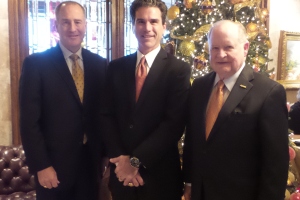
    From L to R: Sean Donohue, Keith Pearson, Sam Coats
    From L to R: Sean Donohue, Keith Pearson, Sam Coats

    Sean Donohue, Chief Executive Officer, DFW International Airport

    Dallas/Fort Worth International Airport is a $31 billion annual economic engine for the DFW region, accounting for nearly 10 percent of the North Texas GDP while employing 150,000 people on a $9 billion payroll. The third-busiest and highest-capacity airport in the world, DFW International Airport hosted 63 million travelers last year.

    For our Q3 2014 Spotlight SeriesSM breakfast, we invited Sean Donohue, chief executive officer of DFW International Airport, to explain this major international hub’s impact on the North Texas economy, as well as ongoing airport improvements that will benefit our area in the future.

    Mr. Donohue joined DFW International Airport in October 2013 after a distinguished, 28-year career in the airline industry. He manages an organization comprised of more than 1,700 employees, as well as an annual operating budget of over $650 million and a $3 billion capital improvement program.

    Economic Impact and Investment

    While safe and reliable operation is the airport’s No. 1 priority, DFW Airport is aggressively investing in infrastructure development to keep pace with major international airports such as Shanghai, Doha and Abu Dhabi.

    As part of its $3 billion capital improvement program, DFW Airport is refurbishing its 40-year-old terminals and upgrading its parking facilities, implementing a new parking guidance system that guides drivers to parking spots using lights. Future improvements will include additional terminals to accommodate projected passenger traffic of 70 million travelers annually.

    These and other improvements are paid for with revenues from non-aeronautical income, such as parking, concessions and commercial development on DFW Airport’s 17,000 acres.

    International Service

    DFW Airport is currently ranked 10th in the United States for international service, with 1.7 million international visitors last year, compared to 2.5 million in Houston, 3 million in Boston and 3.5 million in Chicago. The United States’ fastest-growing airport in terms of international service, DFW Airport is keenly focused on growing this area.

    International travel generates hundreds of millions of dollars each year for the North Texas region, with international visitors typically spending $2,000 to $3,000 in the DFW area. The airport is working to attract more international airlines seeking the best return on their investment in costly international airplanes, such as the A380. In the last four years, the number of international destinations at DFW has grown from 37 to 55, while Atlanta’s international capability has shrunk by 20 percent.

    From 2013 through 2018, the airport is investing $50 million in non-aeronautical revenue to incentivize international carriers to come to DFW. With China’s economic success feeding extensive travel and tourism, attracting Chinese travelers is a high priority for DFW Airport, which will begin new service to Beijing in April 2015.

    Customer Experience

    DFW Airport has historically been rated the top airport in the United States for customer service, and is now benchmarking against world-class airports such as Singapore and Dubai.

    A customer segmentation study this year revealed the preferences of international travelers from various nations, allowing the airport to customize terminal areas based on flight origin. The airport has also cut the international arrival process by 50 percent with technology, such as kiosks where U.S. citizens can swipe their passports and skip customs if they have no checked bags.

    Next summer, DFW Airport’s Terminal D will open North America’s finest travel lounge for first-class and business-class customers. New signage is also in development to help customers navigate the airport and find their way into the cities.

    By investing in its international service capabilities, facilities and technology, DFW Airport is increasing its domestic competitiveness and raising the bar for international airports around the globe.

    Pearson Partners Spotlight Series Breakfast

    Save the date for our next Spotlight SeriesSM breakfast event scheduled for March 10. Look for details and invitations in February. Did you miss one of our Spotlight Series events? Check out summaries of past events.